
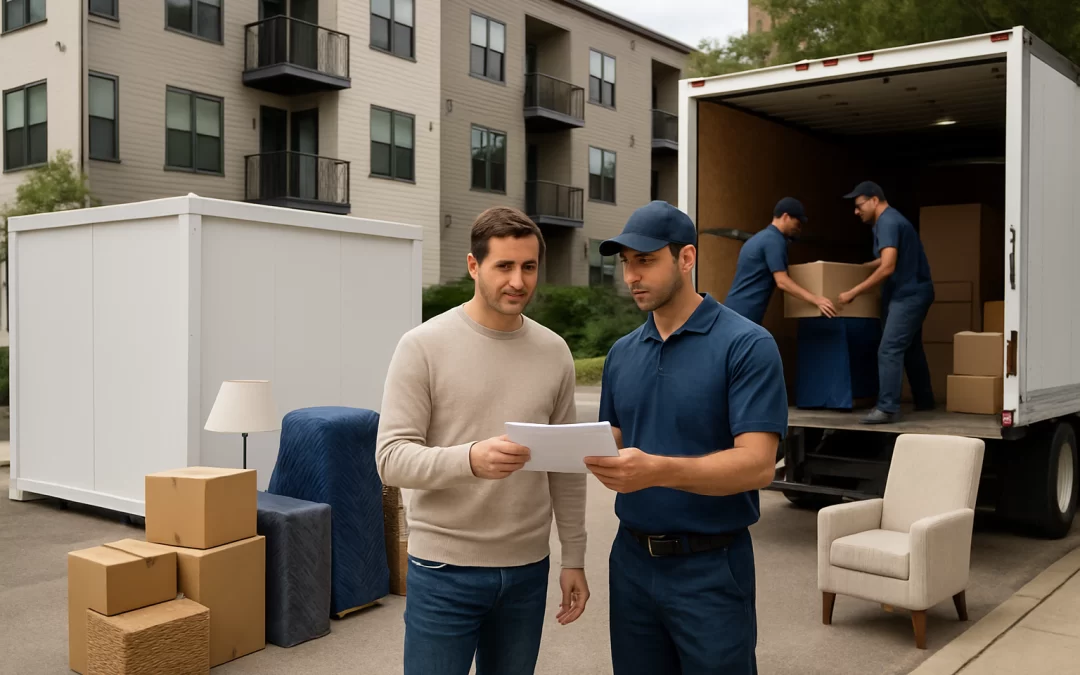
Portable storage containers and moving trucks both work well for apartment moves, but they fit different needs. Moving trucks are usually cheaper for short, one-day local moves if you’re willing to do all the driving and loading at once. Portable storage containers cost more per day but offer flexible loading over several days, can double as short-term storage, and are often easier for tight apartment schedules. The tradeoff: containers are more convenient but may be harder to place at some apartment buildings and can be more expensive for very short, simple moves.
Choosing between a portable storage container and a moving truck can feel overwhelming when you’re already juggling packing, work, and apartment logistics. This guide is for renters and families planning a local or long-distance apartment move who want clear, practical guidance. Below, you’ll find a side-by-side comparison of cost, convenience, and when each option makes the most sense—plus how to use moving quotes to avoid surprises.
Table of Contents
- What Apartment Moves Involve with Containers vs. Trucks
- Common Challenges and Mistakes to Avoid
- What to Do First: Step-by-Step Planning
- Cost Comparison: Portable Storage Containers vs. Moving Trucks
- What to Expect on Moving Day (and Before)
- When to Hire Movers vs. DIY with Containers or Trucks
- How to Compare Moving Quotes and Get Accurate Prices
- Ways to Save Money on Apartment Moves
- What Can Go Wrong and How to Avoid It
- Frequently Asked Questions
- Summary and Next Steps
What Apartment Moves Involve with Containers vs. Trucks
How Portable Storage Containers Work for Apartment Moves
Portable storage containers (often called “moving pods”) are large, weather-resistant boxes delivered to your building. You load them over several days, then the company picks them up and transports them to your new place or to a storage facility.
For apartment moves, containers are especially useful when:
- You need flexible loading time over several days or evenings.
- Your move-out and move-in dates don’t line up and you need temporary storage.
- You want to avoid driving a large truck in city traffic or tight parking.
How Moving Trucks Work for Apartment Moves
With a traditional moving truck rental, you pick up the truck, load everything in one go, drive to your new apartment, and unload—usually within the same day or weekend. You’re responsible for driving, fuel, and returning the truck on time.
Moving trucks are often a good fit when:
- You’re doing a local move and can complete everything in one day.
- You’re comfortable driving a larger vehicle and backing into tight spaces.
- You want to minimize daily rental costs and don’t need built-in storage.
Key Differences at a Glance
- Time flexibility: Containers offer several days to load; trucks are usually by the day or hour.
- Driving: Container companies handle transport; with trucks, you or a helper must drive.
- Storage: Containers can be stored between homes; trucks are for same-day or short-term use.
- Parking and access: Containers need a legal, level space; trucks need temporary parking for loading/unloading.
Common Challenges and Mistakes to Avoid
Challenges Specific to Portable Storage Containers
- Parking and permits: Some apartment complexes or cities don’t allow containers on the street or in lots without permission.
- Space limitations: Tight urban areas may not have enough room for a container to be dropped and picked up safely.
- Underestimating size: Renting too small a container can force last-minute extra units or truck rentals.
- Timing miscommunication: Not confirming delivery and pickup windows can leave you rushed or stuck.
Challenges Specific to Moving Trucks
- Driving stress: Navigating narrow streets, low bridges, or busy city traffic can be intimidating.
- Parking tickets or towing: Illegally parked trucks can be ticketed or towed, adding unexpected costs.
- Rushing the move: Trying to load and unload everything in a few hours can lead to damage or injury.
- Extra fees: Late returns, extra mileage, or fuel charges can quickly increase your total cost.
Common Mistakes with Both Options
- Not measuring furniture, doorways, elevators, and hallways ahead of time.
- Skipping proper packing supplies, which leads to broken items and wasted space.
- Underestimating how long packing and loading will take, especially with stairs or long hallways.
- Waiting too long to book, which limits availability and raises prices during busy seasons.
What to Do First: Step-by-Step Planning
Step 1: Assess Your Apartment and Move Details
Before choosing between a container and a truck, gather a few key details:
- Apartment size (studio, 1-bedroom, 2-bedroom, etc.).
- Number of floors and whether you have an elevator.
- Distance between your current and new apartment (local vs. long-distance).
- Move-out and move-in dates, including any gap between them.
- Parking rules at both locations.
Step 2: Decide What You’re Comfortable Doing Yourself
Think honestly about your time, energy, and physical ability:
- Are you comfortable driving a large truck?
- Do you have friends or family who can help with heavy lifting?
- Would spreading the work over several days reduce your stress?
Step 3: Shortlist Your Options
Based on your answers, narrow down to one or two main approaches:
- DIY with a moving truck.
- DIY loading with a portable storage container (company handles driving).
- Hybrid: hire movers to load/unload your container or truck.
Step 4: Get Initial Price Estimates
Use online quote tools or call companies to get ballpark pricing for both containers and trucks. Ask about:
- Base rates and what’s included.
- Delivery, pickup, mileage, and fuel policies.
- Storage fees if you need your items held between move-out and move-in.
Cost Comparison: Portable Storage Containers vs. Moving Trucks
Typical Cost Ranges for Apartment Moves
Actual costs vary by city, season, and apartment size, but these ranges are common:
- Local apartment move (truck or container, mostly DIY): roughly $300–$1,500.
- Long-distance apartment move: roughly $2,000–$8,000+ depending on distance and volume.
- Full-service movers (they load, drive, and unload): often higher than DIY options, especially for larger apartments or long distances.
How Portable Storage Container Pricing Works
Container companies usually charge:
- A delivery fee for dropping off the container.
- A transportation fee to move it to your new home or storage facility.
- A monthly or daily storage fee if you keep it longer.
Containers can be cost-effective when you need both moving and storage in one solution, or when you want to avoid hotel stays and multiple moves of your belongings.
How Moving Truck Pricing Works
Truck rental companies typically charge:
- A base daily or hourly rental rate.
- Per-mile charges for local moves or a set mileage allowance for long-distance.
- Fuel costs (you must refill before returning).
- Optional insurance and equipment (dollies, furniture pads, straps).
Trucks are often cheaper for short, local apartment moves where you can complete everything in one day and don’t need storage.
What Affects Your Moving Cost the Most
- Distance: Longer moves cost more in fuel, mileage, or transport fees.
- Size of your apartment: More rooms and furniture mean larger containers or trucks and more labor.
- Timing: Weekends, end-of-month, and summer are busier and more expensive.
- Access issues: Stairs, long carries, and limited parking can add labor or time-based fees.
- Extra services: Packing, unpacking, and furniture assembly increase the total cost.
Hidden Fees to Watch For
- Stair or elevator fees from movers if you hire help.
- Extra mileage or late return fees for trucks.
- Container storage charges if your move is delayed.
- Last-minute booking fees or higher rates for same-week moves.
- Parking tickets or permits required for trucks or containers.
What to Expect on Moving Day (and Before)
If You Use a Portable Storage Container
Before loading:
- Container is delivered within a scheduled window (often a few hours).
- You confirm placement with the driver (driveway, lot, or approved street spot).
- You gather supplies: boxes, tape, blankets, straps, and a lock for the container.
During loading:
- You load over several days or at your own pace, which can reduce stress.
- You secure items tightly to prevent shifting during transport.
- You lock the container; you keep the key or lock combination.
After loading:
- The company picks up the container and transports it to your new address or storage.
- At your new place, you unload over a set period, then schedule pickup.
If You Use a Moving Truck
Before loading:
- You pick up the truck at the rental location at your scheduled time.
- You inspect the truck for damage and confirm fuel level and mileage.
- You drive to your apartment and park as close as legally possible.
During loading and unloading:
- You and your helpers carry everything down hallways, stairs, or elevators.
- You load heavier items first and stack boxes to use vertical space.
- You drive to the new apartment, unload, and return the truck on time.
Typical Timeline for Apartment Moves
- Studio or 1-bedroom: 1 day with a truck; 1–3 days of loading with a container.
- 2-bedroom: 1 long day or a weekend with a truck; 2–4 days of loading with a container.
- Long-distance: Add several days to a week or more for transport time, depending on distance and company schedules.
When to Hire Movers vs. DIY with Containers or Trucks
When a Portable Storage Container Makes the Most Sense
Consider a container if:
- You have limited time on moving day but can pack gradually before and after.
- Your move-out and move-in dates don’t match and you need built-in storage.
- You’re not comfortable driving a large truck, especially for long distances.
- Your building allows container placement and you can secure a safe spot.
When a Moving Truck Is Usually Better
A truck is often the better choice if:
- You’re doing a short, local move with no gap between apartments.
- You want to minimize rental days and overall cost.
- You have enough help to load and unload in a single day.
- Your building or city doesn’t allow containers but allows temporary truck parking.
When to Hire Professional Movers
Hiring movers can be worth it when:
- You have heavy items (pianos, large sectionals, bulky bedroom sets).
- You’re moving from or to a walk-up apartment with multiple flights of stairs.
- You’re short on time, have physical limitations, or want to reduce the risk of injury.
You can hire movers just to load and unload your container or truck, or choose full-service movers who handle everything. Full-service options usually cost more but can significantly reduce stress and time.
How to Compare Moving Quotes and Get Accurate Prices
Why Moving Quotes Vary So Much
Quotes differ because companies use different pricing models, include different services, and have varying availability. One company may include basic insurance or equipment, while another charges separately.
Season, day of the week, and how far in advance you book also affect pricing. Getting multiple quotes helps you see a realistic range for your specific apartment move.
Information You Should Provide for Accurate Quotes
To get accurate estimates for containers, trucks, or movers, be ready to share:
- Your current and new addresses (or at least ZIP codes).
- Apartment size and a rough inventory of large items.
- Floor level, elevator access, and any stairs at both locations.
- Preferred move dates and flexibility.
- Whether you need storage between homes.
How Many Quotes to Get and When to Book
- Aim for at least 3 quotes from a mix of container companies, truck rentals, and movers.
- Start getting quotes 4–8 weeks before your move, earlier for summer or long-distance moves.
- Book as soon as you find a fair price and clear terms, especially if you’re moving at the end of the month.
What to Look For in a Moving Quote
- Clear breakdown of what’s included (labor, truck, container, fuel, equipment).
- Any extra fees for stairs, long carries, or parking challenges.
- Cancellation or rescheduling policies.
- Insurance or valuation coverage for your belongings.
Ways to Save Money on Apartment Moves
Smart Ways to Cut Costs with Containers or Trucks
- Move on a weekday or mid-month when rates are often lower.
- Downsize before you move so you need a smaller container or truck.
- Share labor with friends or family instead of paying for full-service movers.
- Return trucks on time and avoid keeping containers longer than needed.
Save on Packing Supplies
Packing materials can add up quickly, especially for larger apartments. You can save by:
- Reusing sturdy boxes from local stores or online marketplaces.
- Using towels, blankets, and clothing as padding for fragile items.
- Buying supplies in bulk instead of last-minute at premium prices.
For more detailed tips on affordable supplies, see this guide on where to find cheap moving boxes and packing materials.
Choose the Right Level of Service
You don’t have to choose all-or-nothing between full-service movers and complete DIY. To balance cost and convenience, you can:
- Hire movers only for heavy items and handle the rest yourself.
- Use a container for transport and hire local movers just to load and unload.
- Rent a smaller truck and make two trips if your move is very short-distance.
What Can Go Wrong and How to Avoid It
Placement and Access Problems
Issue: The container or truck can’t be placed close to your building, leading to long carries and extra time or fees.
How to avoid it:
- Talk to your building management about loading zones and rules.
- Ask the container or truck company about space and clearance requirements.
- Reserve elevators and loading docks in advance if your building requires it.
Damage to Belongings
Issue: Poor packing or rushed loading causes items to shift, break, or scratch.
How to avoid it:
- Use sturdy boxes and plenty of padding for fragile items.
- Secure furniture with straps and use moving blankets.
- Load heavy items on the bottom and avoid leaving gaps.
Unexpected Costs and Delays
Issue: Last-minute changes, parking tickets, or extended rentals increase your total cost.
How to avoid it:
- Confirm all details (dates, times, addresses) with your provider in writing.
- Plan for traffic and building access time when scheduling.
- Have a backup plan if your elevator is out of service or weather is bad.
Choosing the Wrong Option for Your Situation
Issue: Picking a truck when you really needed storage, or a container when you needed a fast, same-day move.
How to avoid it:
- Be honest about your schedule, energy, and move complexity.
- Compare both options side by side, including all fees and timing.
- Read a detailed comparison like this guide on storage pods vs. moving trucks before deciding.
Frequently Asked Questions
Is a portable storage container or a moving truck cheaper for an apartment move?
For most short, local apartment moves, a moving truck is usually cheaper if you can complete everything in one day. Portable storage containers can cost more per day but may save money if you also need storage or want to avoid multiple moves of your belongings. The best way to know is to get quotes for both options using your exact dates and addresses.
Can I use a portable storage container at my apartment building?
It depends on your building and local rules. Some complexes allow containers in parking lots or loading areas, while others only allow short-term truck parking. Always check with your landlord or property manager and ask the container company about space and permit requirements.
How far in advance should I book a container or moving truck?
For most apartment moves, booking 4–8 weeks in advance gives you better pricing and availability. During busy times like summer or end-of-month, earlier is better, especially for long-distance moves or when you need specific dates. Last-minute bookings are possible but often more expensive and less flexible.
Can I hire movers just to load and unload my container or truck?
Yes, many moving companies offer labor-only services where they handle the heavy lifting but you provide the container or truck. This can be a good middle ground if you want professional help without paying for full-service moving. Be sure to mention stairs, elevators, and large items when getting quotes.
What size container or truck do I need for a 1- or 2-bedroom apartment?
As a rough guide, a 10–12 foot truck or small container can work for a studio or small 1-bedroom, while a 15–20 foot truck or medium container is more typical for a larger 1-bedroom or small 2-bedroom. Larger 2-bedroom apartments may need a 20–26 foot truck or multiple containers. Always discuss your inventory with the company to avoid running out of space.
Are portable storage containers good for long-distance apartment moves?
Yes, containers can be very practical for long-distance moves, especially if your move-in date is uncertain or you want to avoid driving a large truck across states. They allow you to load at your own pace, store your items if needed, and then unload when you’re ready. For more details, you can review tips in this guide on considering moving pods for your move.
Summary and Next Steps
For apartment moves, moving trucks are usually the most budget-friendly choice for short, straightforward local moves you can complete in a day. Portable storage containers offer more flexibility and built-in storage, making them ideal when your dates don’t line up, you’re moving long-distance, or you want to avoid driving a large truck.
Most apartment moves fall in the range of about $300–$1,500 for local and $2,000–$8,000+ for long-distance, depending on distance, apartment size, access, and services. Your best next step is to gather a few details about your move, then request multiple quotes for both container and truck options, with and without movers.
Compare at least three quotes, look closely at what’s included, and book as early as you can to lock in better rates and dates. With a clear plan and the right option for your situation, you can reduce stress, control your moving costs, and feel more confident about your upcoming apartment move.
About the Author
This article was written by the team at Rex Direct, the owners of QuickMovingQuotes.com.
Rex Direct supports businesses and consumers throughout the moving industry by providing technology and data solutions that help homeowners compare moving services, understand pricing, and make informed relocation decisions.
Through their work with movers, relocation platforms, and lead generation services, the Rex Direct team has developed extensive insight into how interstate moving companies operate and how consumers can protect themselves during the moving process.