
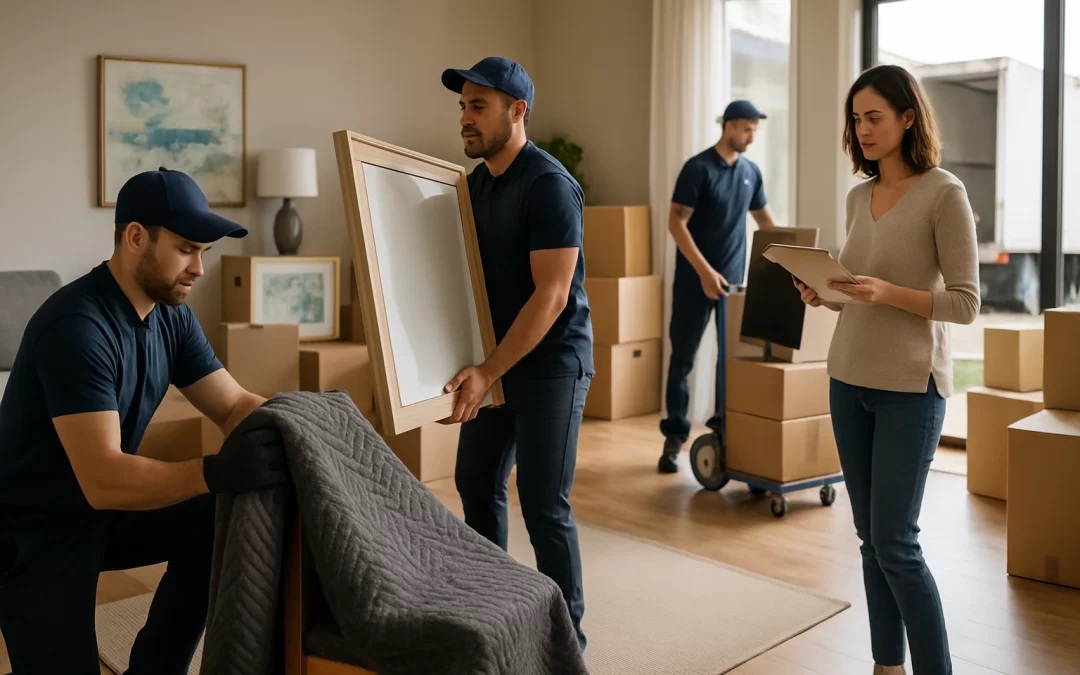
Moving insurance pricing depends on the type of coverage you choose, the value of your belongings, and whether you’re moving locally or long distance. Basic protection from movers (called valuation) is usually included at no extra charge but offers very limited reimbursement, often around $0.60 per pound per item. Upgraded coverage or third-party moving insurance typically costs about 1%–5% of the value of your goods, so insuring $30,000 of belongings might run $300–$1,500. The tradeoff is simple: lower-cost coverage means more risk out of pocket if something is lost or damaged, while higher-cost coverage can greatly reduce your financial stress if the worst happens.
When you’re planning a move, it’s easy to focus on boxes, trucks, and dates—and overlook what happens if something breaks. Moving insurance and mover “valuation” help protect your belongings, but the options and pricing can be confusing. This guide is for anyone planning a local or long-distance move who wants clear, practical information on coverage types, real costs, and how to get the best value without overpaying.
Table of Contents
- What Moving Insurance Pricing Involves
- Types of Moving Insurance and Coverage Options
- Common Moving Insurance Mistakes to Avoid
- What to Do First: Step-by-Step Coverage Planning
- Moving Insurance Costs and Pricing Examples
- When to Rely on Movers vs DIY Insurance Options
- How to Compare Moving Quotes and Insurance Options
- Ways to Save Money on Moving Insurance
- What Can Go Wrong and How to Avoid It
- Frequently Asked Questions
- Summary and Next Steps
What Moving Insurance Pricing Involves
When people say “moving insurance,” they usually mean any protection that pays you if your belongings are lost or damaged during a move. In reality, there are two main pieces: the mover’s liability (valuation) and optional third-party insurance. Pricing depends on how much protection you choose and how much your items are worth.
For most household moves, you’ll be choosing between:
- Basic protection that’s cheap or free but pays very little if something breaks
- Upgraded coverage that costs more but can cover repair or replacement at a realistic value
- Separate insurance policies that fill gaps in what the mover’s coverage doesn’t handle
Your goal is to match the cost of coverage to the risk you’re comfortable taking, based on the value and fragility of what you’re moving.
Types of Moving Insurance and Coverage Options
Basic Carrier Liability (Released Value Protection)
This is the minimum level of protection movers are required to offer for interstate moves and is often available for intrastate moves as well. It’s usually included in the base moving cost at no additional charge.
- Typical payout: About $0.60 per pound per item (for interstate moves)
- Example: A 20-pound TV damaged beyond repair would only be covered for about $12
- Best for: Low-value items or very short moves where you’re comfortable with risk
This is not true insurance; it’s limited liability. It keeps your upfront cost low but offers very little real protection for electronics, furniture, or high-value items.
Full Value Protection (FVP) from the Moving Company
Full Value Protection is an upgraded level of mover liability where the company agrees to repair, replace, or pay the current market value of damaged or lost items, up to a declared value. It usually adds a separate fee to your moving quote.
- Typical cost: Often 1%–2% of the declared value of your shipment, sometimes with a minimum charge
- Example: Declaring $50,000 in value might cost $500–$1,000 in FVP coverage
- Deductibles: Some plans include a deductible (e.g., $250–$500) to lower the premium
FVP is usually a better fit for long-distance moves or when you have a lot of mid- to high-value items. It still has limits and exclusions, so you need to read the terms carefully.
Third-Party Moving Insurance Policies
Third-party insurers sell separate moving insurance policies that can supplement or replace the mover’s coverage. These are especially common for long-distance, interstate, or international moves.
- Coverage types: Full replacement value, named perils, or all-risk policies
- Cost range: Roughly 1%–5% of the insured value, depending on coverage level and deductible
- Use case: When you want broader protection than the mover’s valuation offers
These policies may cover things like natural disasters, theft, or damage during storage that basic mover liability might not fully address.
Homeowners or Renters Insurance During a Move
Some homeowners or renters insurance policies offer limited coverage for belongings while they’re in transit or in temporary storage. However, this coverage is often partial and may not apply to damage caused by movers.
- Coverage may be limited to certain risks (like theft or fire)
- There may be lower limits for items away from your home
- You’ll usually pay your standard policy deductible before coverage kicks in
It’s worth calling your insurer to ask exactly what is and isn’t covered during a move, so you can decide whether you still need additional moving insurance.
Special Coverage for High-Value Items
High-value items—such as fine art, antiques, collectibles, or expensive electronics—often need extra attention. Standard coverage may cap payouts for these categories unless you list them separately.
- Ask about “high-value inventory” forms for items above a certain dollar amount
- Consider separate riders or specialty insurance for artwork, jewelry, or collections
- Get appraisals or proof of value for very expensive pieces
Listing these items properly can affect your moving insurance pricing but also ensures you’re not underinsured if something happens.
Common Moving Insurance Mistakes to Avoid
Many people don’t think about coverage until something breaks. By then, it’s too late to change your protection level. Here are common mistakes to avoid:
- Assuming “the movers will pay for everything” without reading the valuation and exclusions
- Relying only on basic $0.60-per-pound coverage for expensive or fragile items
- Not declaring high-value items or failing to list them on required forms
- Underestimating the total value of your belongings to save on premiums
- Skipping photos and documentation of items before the move
- Not understanding deductibles and how they affect what you’ll actually receive
A bit of planning and documentation before moving day can dramatically improve your chances of a smooth claim if something goes wrong.
What to Do First: Step-by-Step Coverage Planning
1. Estimate the Value of Your Belongings
You don’t need a perfect number, but you do need a realistic range. Walk room by room and think about what it would cost to replace your furniture, electronics, clothing, and household items at today’s prices.
- Studio or 1-bedroom apartment: often $15,000–$30,000 in belongings
- 2–3 bedroom home: often $30,000–$60,000+
- 4+ bedroom home: often $60,000–$100,000+ depending on furnishings
Use these estimates to decide how much coverage you actually need and what moving insurance pricing level makes sense.
2. Identify High-Risk and High-Value Items
Some items are more likely to be damaged or more expensive to replace. Make a short list of:
- Large TVs, computers, and sound systems
- Glass tables, mirrors, artwork, and fragile decor
- Musical instruments, collectibles, and antiques
- Heirlooms or items with high sentimental value
These items may justify stronger coverage or special packing, even if you keep basic protection for everything else.
3. Ask Each Moving Company About Their Coverage Options
When you request moving quotes, ask specific questions about valuation and insurance options. Don’t assume all movers offer the same protection.
- What’s included in the base price (basic liability)?
- Do you offer Full Value Protection? At what cost and deductible?
- Are there limits on certain items (electronics, artwork, antiques)?
- Do you work with any third-party insurers?
For a deeper look at how movers price their services and coverage, you can review how moving company quotes and pricing work.
4. Compare Coverage Levels, Not Just Moving Cost
Two quotes that look similar on price may offer very different protection. When comparing, look at:
- Type of coverage (basic vs Full Value Protection)
- Declared value of your shipment
- Deductibles and exclusions
- How claims are handled and typical timelines
Sometimes paying a bit more for a mover with stronger coverage and a better claims reputation is worth it.
5. Decide How Much Risk You’re Willing to Take
There’s no one “right” answer. It depends on your budget and your comfort level with risk.
- If you’re moving mostly low-value items and can afford to replace them, basic coverage might be enough.
- If you have a lot of valuable furniture and electronics, Full Value Protection or third-party insurance is usually wise.
- If you’re moving cross-country or internationally, stronger coverage is generally recommended.
Think about how stressful it would be to replace several big items out of pocket—and weigh that against the cost of better coverage.
Moving Insurance Costs and Pricing Examples
How Moving Insurance Fits into Overall Moving Costs
Moving insurance pricing is just one part of your total moving budget. Typical ranges for professional moves are:
- Local move: $300–$1,500, depending on home size, hours, and crew size
- Long-distance move: $2,000–$8,000+ based on distance and shipment weight
- Full-service moving: Often higher, especially if packing, unpacking, and specialty services are included
Insurance or valuation fees are usually a smaller percentage of the total, but they can make a big difference if something goes wrong.
Typical Moving Insurance Pricing Ranges
While exact costs vary by mover and insurer, here are realistic ballpark ranges:
- Basic released value protection: Usually included at no extra charge, but very limited coverage
- Full Value Protection from movers: Often 1%–2% of declared value (e.g., $300–$600 on $30,000 of goods)
- Third-party moving insurance: Roughly 1%–5% of insured value, depending on coverage level and deductibles
Higher deductibles usually mean lower premiums, but you’ll pay more out of pocket if you file a claim.
Example Scenarios
Here are simplified examples to show how moving insurance pricing might look in real life:
- Small local apartment move: You estimate $20,000 in belongings. You choose basic coverage only, so you pay $0 extra for insurance but accept that a damaged 50-pound dresser would only be covered for about $30.
- 2-bedroom long-distance move: You estimate $40,000 in belongings. Full Value Protection at 1.5% might cost around $600, with a $500 deductible. If a $1,500 sofa is destroyed, you could receive repair, replacement, or a payout minus the deductible.
- 4-bedroom cross-country move with high-value items: You estimate $90,000 in belongings and buy a third-party policy at 2.5%, costing about $2,250, with a $250 deductible and broader coverage for artwork and antiques.
These examples are for illustration only, but they show how coverage choices affect your total moving cost and financial protection.
Hidden Fees and Cost Factors to Watch For
Insurance and valuation are only part of the pricing picture. Other moving fees can surprise you if you’re not prepared.
- Stairs, long carries, or elevator fees
- Heavy or specialty items (pianos, safes, large appliances)
- Last-minute bookings or changes to your move date
- Storage-in-transit charges if your new home isn’t ready
Understanding these fees helps you see the full cost picture. For more detail, you can review how moving company fees and hidden costs work.
When to Hire Movers vs DIY (and How It Affects Insurance)
Hiring Professional Movers
When you hire professional movers, you typically get access to their valuation options and sometimes to partner insurance providers. This can simplify your coverage decisions.
- Movers handle packing, loading, and transport, which can reduce the chance of damage if they’re experienced
- You can choose between basic liability and Full Value Protection
- Claims are usually handled through the moving company or their insurer
Professional movers are often the better choice for long-distance moves, large homes, or when you have many fragile or high-value items.
DIY Moves with Rental Trucks or Moving Containers
If you rent a truck or use moving containers, your coverage situation changes. You’re more responsible for packing and loading, and the protection options may be different.
- Truck rental companies may offer limited cargo coverage or damage waivers
- Container companies may offer basic protection with options to upgrade
- You may need separate third-party moving insurance to fully protect your belongings
DIY moves can save money on labor but may increase your risk of damage if you’re not used to packing and lifting. That risk should factor into how much coverage you buy.
Which Option Fits Your Situation?
Consider hiring movers if:
- You’re moving long distance or across state lines
- You have a lot of furniture, fragile items, or high-value belongings
- You want clearer coverage options and a single point of contact for claims
Consider DIY if:
- You’re moving locally with a smaller amount of stuff
- You’re comfortable packing and lifting, and you have help
- You’re willing to arrange your own third-party insurance if needed
For a broader look at what to expect when hiring professionals, see this guide on what to know before hiring a moving company.
How to Compare Moving Quotes and Insurance Options
Get Multiple Quotes
To understand both moving costs and moving insurance pricing, aim for at least three written quotes from reputable movers. Make sure each quote includes:
- A clear description of services (packing, loading, unloading, etc.)
- What level of liability or valuation is included
- Optional upgrades for Full Value Protection or third-party insurance
Comparing multiple quotes helps you see where one mover might be cheaper on labor but more expensive on coverage—or vice versa.
Compare Coverage Apples-to-Apples
When you look at quotes, don’t just compare the bottom-line price. Check:
- Is the quote based on basic liability or Full Value Protection?
- What declared value is used for your shipment?
- Are there deductibles, and how much are they?
- Are high-value items listed and covered properly?
A slightly higher moving quote with better coverage can be a better value than a cheaper quote with minimal protection.
Ask About Claims History and Process
How a company handles claims matters as much as the coverage itself. Ask:
- How do I file a claim if something is damaged?
- What documentation do you require (photos, receipts, inventory)?
- What is the typical timeline for resolving claims?
Companies that are transparent and organized about claims are usually more reliable when problems arise.
When to Get Quotes and When to Book
Ideally, start getting moving quotes 4–8 weeks before your move date, or earlier for long-distance or peak-season moves. This gives you time to:
- Compare prices and coverage options
- Ask follow-up questions about insurance and valuation
- Book your preferred mover before their schedule fills up
Once you’ve chosen a mover and coverage level, confirm everything in writing, including the type of protection and any declared values.
Ways to Save Money on Moving Insurance (Without Taking Big Risks)
Right-Size Your Coverage
You don’t have to choose between “no protection” and “maximum protection.” Instead:
- Estimate your belongings accurately—don’t overstate or understate value
- Consider a moderate deductible to lower your premium
- Focus on strong coverage for the items that would be hardest to replace
This approach keeps your moving insurance pricing reasonable while still protecting you from major losses.
Improve Packing and Documentation
Good packing reduces the chance of damage and can make claims smoother.
- Use sturdy boxes, proper padding, and clear labels
- Let professionals pack very fragile or high-value items when possible
- Take photos of valuable items and note existing damage before the move
Some insurers may require proof of proper packing for certain types of claims, especially in DIY moves.
Check Existing Insurance Policies
Before buying extra coverage, review what you already have:
- Ask your homeowners or renters insurer what’s covered during a move
- Check whether your credit card offers any moving-related protections
- Confirm whether coverage applies only while items are in your home, or also in transit
Even if your existing policies don’t fully replace moving insurance, they might reduce how much extra coverage you need.
Plan Your Move Timing
Moving during off-peak times can lower your overall moving cost, which can free up budget for better coverage.
- Weekdays are often cheaper than weekends
- Mid-month is usually less busy than the first or last week of the month
- Non-summer months can be more affordable than peak summer season
Lower base moving costs can make it easier to afford Full Value Protection or a solid third-party policy.
What Can Go Wrong and How to Avoid It
Underinsured Shipments
If you declare a value that’s too low for your shipment, you may be considered “underinsured.” In some cases, this can reduce your payout even if only one item is damaged.
- Be honest and realistic about the total value of your belongings
- Ask how underinsurance is handled in the policy or valuation agreement
- Update your declared value if you add or remove major items before moving day
Denied or Reduced Claims
Claims can be denied or reduced for several reasons, including improper packing, excluded items, or missed deadlines.
- Read the coverage terms and exclusions before you sign
- Follow packing guidelines, especially for DIY moves
- Inspect your belongings promptly after delivery and report issues quickly
Most policies and mover agreements have strict timelines for filing claims, so don’t delay if you notice damage.
Misunderstanding What’s Covered
Not all damage is treated the same. For example, normal wear and tear, minor scratches, or damage to items packed by the owner may be handled differently.
- Ask for examples of what is and isn’t covered
- Clarify how “pairs and sets” are treated (e.g., one chair in a set of four)
- Confirm how electronics are covered if they arrive not working but with no visible damage
Clear expectations up front can prevent frustration later.
Not Matching Coverage to Move Type
A short local move with mostly low-value items doesn’t need the same level of coverage as a cross-country move with a fully furnished home. Over- or under-insuring can both be costly.
- For local moves, you might prioritize careful packing and basic coverage
- For long-distance moves, stronger coverage is usually worth the added cost
- For interstate moves, review specific guidance on whether you should get movers insurance
Frequently Asked Questions
Is moving insurance worth it?
Moving insurance or upgraded mover valuation is usually worth it if you have more than a few thousand dollars in belongings or are moving long distance. The cost is typically a small percentage of your shipment value, and it can save you from paying out of pocket to replace furniture, electronics, or other big-ticket items if something goes wrong.
How much does moving insurance usually cost?
Basic released value protection is often included at no extra charge but offers very limited coverage. Upgraded Full Value Protection or third-party moving insurance typically costs about 1%–5% of the value of your belongings, depending on coverage level, deductibles, and the type of move.
Does my homeowners or renters insurance cover my move?
Some homeowners and renters policies provide limited coverage for belongings while they’re in transit, but it’s often restricted to certain risks and may have lower limits. You should call your insurer to confirm exactly what’s covered and decide whether you still need additional moving insurance or mover valuation.
What’s the difference between valuation and insurance?
Valuation is the mover’s legal responsibility for your belongings and is not the same as a traditional insurance policy. Insurance is usually provided by a third-party company and can offer broader protection, but you still need to understand deductibles, exclusions, and claim procedures for both.
When should I buy moving insurance?
You should decide on your coverage level when you book your move or shortly afterward, not on moving day. This gives you time to compare options, list high-value items, and make sure your declared value is accurate before your belongings are loaded.
Can I get moving insurance for a DIY move?
Yes, many third-party insurers offer policies for DIY moves using rental trucks or moving containers. You’ll need to follow their packing guidelines and keep good documentation, but this can be a smart way to protect your belongings when you’re handling the move yourself.
Summary and Next Steps
Moving insurance pricing comes down to how much protection you want, how valuable your belongings are, and how far you’re moving. Basic coverage is cheap or free but offers limited payouts, while Full Value Protection or third-party policies cost more but can significantly reduce your financial risk if items are lost or damaged.
For most local moves, expect total moving costs in the $300–$1,500 range, with optional coverage adding a modest amount on top. For long-distance moves, total costs often run $2,000–$8,000+ with insurance or valuation typically priced at 1%–5% of your shipment’s value.
Your next step is to get multiple moving quotes that clearly show both the base price and the coverage options. Compare not just the cost, but also the type of protection, deductibles, and how claims are handled so you can choose the best value for your situation.
Planning ahead, asking detailed questions about coverage, and matching your protection level to the value of your belongings will help you move with more confidence and fewer financial surprises. Take a few minutes now to gather quotes and coverage details so you can book movers and insurance that fit your budget and your peace of mind.
About the Author
This article was written by the team at Rex Direct, the owners of QuickMovingQuotes.com.
Rex Direct supports businesses and consumers throughout the moving industry by providing technology and data solutions that help homeowners compare moving services, understand pricing, and make informed relocation decisions.
Through their work with movers, relocation platforms, and lead generation services, the Rex Direct team has developed extensive insight into how interstate moving companies operate and how consumers can protect themselves during the moving process.