
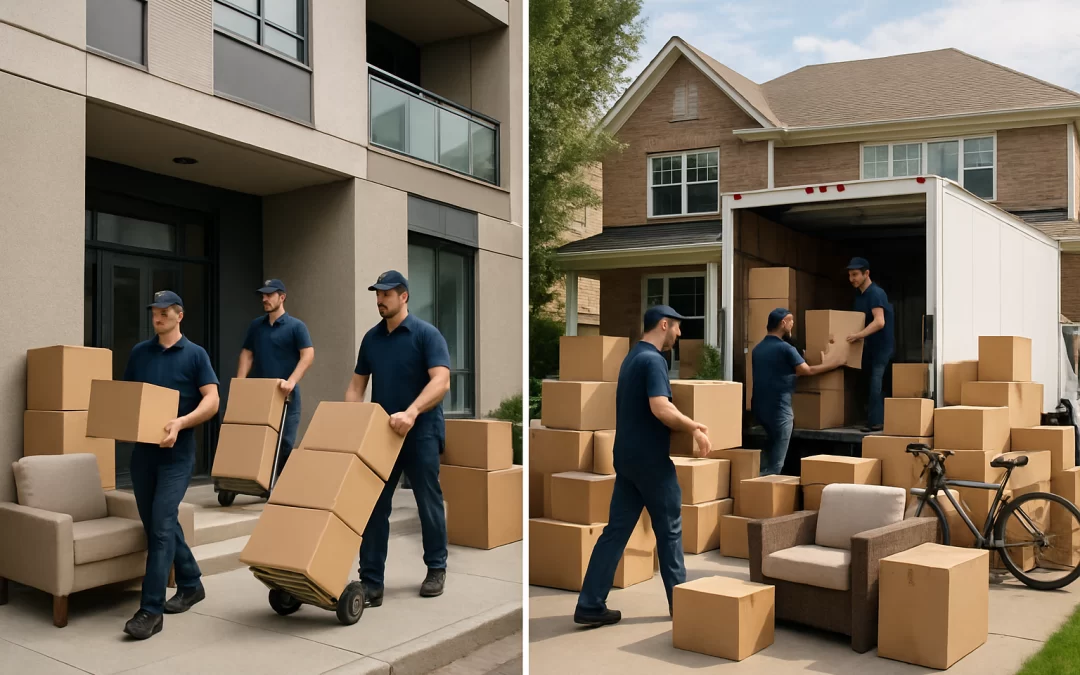
Apartment vs. house long distance moving costs are mainly driven by how much you own, how easy it is to access your home, and how far you’re going. In general, a long distance apartment move might range from about $2,000–$5,000, while a similar house move can easily run $4,000–$8,000+ because there’s usually more furniture, boxes, and labor involved. Both types of moves also see extra charges for stairs, elevators, long carries, and tight parking. You can’t avoid every fee, but careful planning, decluttering, and comparing multiple moving quotes can significantly lower your total cost.
Planning a long distance move is stressful whether you’re leaving a one-bedroom apartment or a four-bedroom house. You may be unsure what your move should cost, what’s different between apartment and house moves, and when it makes sense to hire movers versus doing it yourself. This guide breaks everything down in simple terms so you can budget realistically, avoid common mistakes, and decide when to request professional moving quotes.
Table of Contents
- What Apartment vs. House Long Distance Moves Involve
- Key Cost Differences: Apartment vs. House Long Distance Moves
- Common Challenges and Mistakes to Avoid
- What to Do First: Step-by-Step Planning
- What to Expect on a Long Distance Move
- Apartment vs. House: When to Hire Movers vs. DIY
- How to Compare Long Distance Moving Quotes
- Ways to Save Money on Apartment and House Long Distance Moves
- What Can Go Wrong and How to Avoid It
- Frequently Asked Questions
- Summary and Next Steps
What Apartment vs. House Long Distance Moves Involve
Typical Apartment Long Distance Move
Apartment moves usually involve less total volume than houses, but access can be more complicated. Movers often deal with elevators, narrow hallways, shared loading areas, and strict building rules.
Common features of long distance apartment moves include:
- Smaller overall shipment (fewer rooms, less furniture)
- More boxes and compact furniture instead of large sets
- Elevators, stairwells, or long walks from truck to unit
- Building move-in/move-out time windows and elevator reservations
- Parking restrictions or limited loading zones
Typical House Long Distance Move
House moves usually involve more rooms, heavier furniture, and more fragile items. Access is often easier for the truck, but the volume and weight are higher, which drives up cost.
Common features of long distance house moves include:
- More furniture (bedroom sets, dining sets, outdoor furniture)
- Garage, basement, attic, and outdoor items
- Appliances, tools, and bulky or specialty items
- Driveway or street parking for large moving trucks
- More packing time and more complex inventory
How Long Distance Pricing Usually Works
For long distance moves, most movers base pricing on:
- Total weight or volume of your belongings
- Distance between your current home and destination
- Labor and time for loading and unloading
- Additional services (packing, crating, storage, assembly)
This means a small, well-packed house can sometimes cost less than a cluttered, full apartment, but in general, houses cost more because they contain more items.
Key Cost Differences: Apartment vs. House Long Distance Moves
Typical Cost Ranges
Every move is different, but these ranges can help you set expectations:
- Small apartment (studio–1 bedroom) long distance: roughly $2,000–$4,000
- 2-bedroom apartment or small house: roughly $3,000–$6,000
- 3–4 bedroom house long distance: roughly $4,000–$8,000+ depending on distance and services
Local moves are usually cheaper because they’re billed by the hour. A local apartment or small house move may run $300–$1,500 depending on time, crew size, and access.
Why Houses Usually Cost More Than Apartments
House moves tend to cost more because of:
- More weight and volume: extra rooms, storage areas, and outdoor items add up.
- More packing materials: more boxes, padding, and specialty packing.
- Longer loading and unloading times: more items mean more labor hours.
- Higher chance of specialty items: pianos, safes, large appliances, or custom furniture.
Why Some Apartments Still Get Expensive
Even a small apartment can be costly if access is difficult or the building has strict rules. Movers may charge extra for:
- Multiple flights of stairs or slow elevators
- Long carries from the truck to your door
- Parking challenges or the need for a shuttle truck
- Limited move-in windows that slow down the crew
These access issues can narrow the cost gap between an apartment and a small house, especially on long distance moves.
Common Challenges and Mistakes to Avoid
Apartment-Specific Challenges
- Not reserving elevators or loading docks: This can delay the crew and lead to extra time charges.
- Underestimating walking distance: Long hallways and parking far from the entrance increase labor costs.
- Ignoring building rules: Some buildings require certificates of insurance or limit move times.
- Last-minute packing: Poorly packed boxes slow down movers and can increase the final bill.
House-Specific Challenges
- Underestimating how much you own: Garages, sheds, and attics add significant volume and weight.
- Not decluttering early: Moving items you don’t need can add hundreds or thousands to a long distance move.
- Forgetting outdoor and specialty items: Trampolines, grills, and large tools may require extra handling.
- Assuming everything will fit in one truck: Larger homes sometimes need multiple trucks or trips.
General Moving Mistakes
- Booking movers too late, especially in summer or at month-end
- Not getting multiple quotes to compare pricing and services
- Overlooking hidden fees like stairs, long carries, or fuel surcharges
- Choosing a mover based only on the lowest price without checking reviews or licensing
What to Do First: Step-by-Step Planning
Step 1: Take Inventory of Your Home
Walk through every room, closet, and storage area and make a simple list of what you plan to move. For apartments, pay attention to bulky items like sectionals, beds, and dressers. For houses, include garage tools, outdoor furniture, and attic or basement storage.
Step 2: Decide What to Keep, Sell, Donate, or Toss
Decluttering is one of the easiest ways to cut long distance moving costs. The less you move, the less you pay.
- Sell or donate furniture that won’t fit your new place.
- Recycle or toss broken or rarely used items.
- Use up pantry food and cleaning supplies before moving day.
Step 3: Check Access at Both Locations
Access affects both apartment and house moves, but in different ways.
- For apartments: confirm elevator access, loading dock rules, and required paperwork.
- For houses: check driveway clearance, low trees, and street parking rules for large trucks.
- Take photos or videos to share with movers when getting quotes.
Step 4: Decide on Your Moving Approach
Before you start calling companies, decide if you want:
- Full-service movers (they load, transport, and unload; optional packing)
- A hybrid approach (you pack, they move; or you use a container service)
- DIY with a rental truck or trailer
Your home size, distance, budget, and physical ability will guide this choice, which we’ll cover in more detail below.
Step 5: Start Gathering Moving Quotes
Once you know roughly what you’re moving and how you want to move, start collecting estimates. For a deeper breakdown of how pricing works and what affects it, review the guide on what moving quotes are and how to compare them.
What to Expect on a Long Distance Move
Timeline and Scheduling
Long distance moves usually follow this rough timeline:
- 4–8 weeks before: Declutter, research movers, and request quotes.
- 3–6 weeks before: Book your mover or truck, confirm dates, and start packing non-essentials.
- 1–2 weeks before: Finish packing, label boxes, and confirm details with your mover.
- Move-out day: Movers load your belongings or you load your truck/container.
- Transit: Delivery can take several days to a couple of weeks depending on distance and route.
- Move-in day: Unloading, basic setup, and checking for damage.
Effort Level: Apartment vs. House
Apartment moves often involve more coordination with building management but less physical volume. House moves are usually more physically demanding because of the number of items and rooms.
- Apartments: More paperwork and timing rules, but fewer items to pack and unpack.
- Houses: More packing, more heavy lifting, and more time spent organizing at the new place.
Logistics and Communication
For both apartments and houses, clear communication with your mover is key:
- Confirm pickup and delivery windows in writing.
- Share any access issues or changes as soon as you know them.
- Keep important items (documents, medications, valuables) with you, not on the truck.
Apartment vs. House: When to Hire Movers vs. DIY
When Hiring Movers Makes Sense for Apartments
Even with a smaller space, professional movers can be worth it if:
- You’re moving long distance and don’t want to drive a large truck.
- Your building has tight stairwells, elevators, or strict move-out rules.
- You have heavy items like a sleeper sofa, large bed, or home office setup.
- You’re on a tight timeline and can’t take days off work to move.
When Hiring Movers Makes Sense for Houses
For houses, professional movers are often the safer and more realistic option, especially for long distance moves.
- There’s usually too much furniture and too many boxes for a simple DIY move.
- Driving a large truck cross-country can be stressful and tiring.
- Professional crews are trained to move large items without damaging walls or floors.
- Full-service options can handle packing, loading, and unloading for you.
When DIY or Hybrid Options Can Work
DIY or hybrid options can save money if you’re willing to put in more effort.
- DIY truck rental: You pack, load, drive, and unload. Best for smaller moves and shorter distances.
- Portable containers: You pack and load; the company transports the container. This can be a good middle ground for both apartments and smaller houses.
- Labor-only movers: Hire help just for loading and unloading while you handle the truck or container.
For more detail on rental truck sizes and costs, see the guide on U-Haul truck sizes and prices.
How to Compare Long Distance Moving Quotes
What Affects Moving Costs Most
Whether you’re in an apartment or a house, these factors drive your long distance moving cost:
- Distance: Longer moves cost more in fuel, time, and logistics.
- Size of your shipment: More weight or volume equals higher cost.
- Timing: Summer, weekends, and month-end dates are more expensive.
- Services: Packing, unpacking, storage, and specialty handling add to the total.
- Access: Stairs, elevators, long carries, and parking challenges increase labor.
Hidden Fees to Watch For
Some fees are not obvious at first glance but can significantly change your final bill:
- Stair or elevator fees
- Long carry charges (when the truck can’t park close)
- Shuttle fees (smaller truck needed due to access issues)
- Fuel surcharges or tolls
- Fees for heavy or bulky items (pianos, safes, large appliances)
- Last-minute booking or rescheduling fees
For a deeper look at these charges, review the guide on moving company fees and how to avoid hidden costs.
Why Quotes Vary Between Movers
It’s normal for quotes to differ, sometimes by thousands of dollars on a long distance move. Reasons include:
- Different ways of estimating weight or volume
- Different levels of service included (packing, materials, insurance)
- Company size, overhead, and how busy they are on your dates
- Flat-rate vs. hourly or weight-based pricing structures
How to Get Accurate Estimates
To get realistic quotes for both apartments and houses:
- Provide a detailed inventory or do a virtual/in-home survey.
- Share photos or videos of access points, stairs, and parking.
- Be honest about everything you plan to move, including storage areas.
- Ask for a written estimate that clearly lists all potential fees.
For more help understanding how movers price jobs and how to compare estimates, see the guide on moving company quotes and pricing.
How Many Quotes to Get and When to Book
- Get at least 3 quotes from reputable, licensed movers.
- For long distance moves, try to book 4–8 weeks in advance, longer if moving in peak season.
- For apartments in busy urban areas, book early to secure elevator and loading dock times.
Ways to Save Money on Apartment and House Long Distance Moves
Smart Ways to Cut Costs for Apartment Moves
- Declutter aggressively: Small spaces can still hold a lot of unnecessary items.
- Pack yourself: Do your own packing and labeling to avoid packing labor charges.
- Reserve elevators and loading areas: Smooth access reduces time-based fees.
- Be flexible on dates: Mid-week and mid-month moves are often cheaper.
Smart Ways to Cut Costs for House Moves
- Downsize furniture: Sell or donate large pieces that won’t fit your new home.
- Clear out storage areas early: Don’t pay to move items you forgot you had.
- Disassemble simple furniture yourself: Beds and tables can be broken down before movers arrive.
- Consider a hybrid approach: Use movers for heavy items and handle smaller boxes yourself if practical.
General Money-Saving Tips
- Compare multiple quotes instead of choosing the first company you call.
- Ask about off-peak discounts or flexible delivery windows.
- Use free or low-cost packing materials where safe (but don’t skimp on protection for fragile items).
- Label boxes clearly so movers can work efficiently at both ends.
What Can Go Wrong and How to Avoid It
Common Problems in Apartment Moves
- Elevator not reserved: Movers are forced to use stairs or wait, increasing time and cost.
- Parking tickets or towing: Poor planning for truck parking can cause delays and extra fees.
- Building damage: Scratches or dents in hallways can lead to charges from your landlord or HOA.
To avoid these issues, confirm building rules in writing and share them with your mover before move day.
Common Problems in House Moves
- Underestimated size: The truck is too small or the quote is too low, leading to extra charges.
- Weather issues: Rain or snow can slow loading and unloading and increase risk of damage.
- Access surprises: Low trees, narrow driveways, or steep hills can require a shuttle truck.
Walk your property with access in mind and discuss any concerns with your mover during the quote process.
Protecting Your Belongings
Even with careful movers, long distance transport carries some risk of damage or loss. Ask each company about their coverage options and consider whether you need additional protection. For more detail, see the guide on whether you should get movers insurance for your move.
Frequently Asked Questions
Is it cheaper to move an apartment or a house long distance?
In most cases, it’s cheaper to move an apartment long distance because there’s less furniture and fewer boxes. However, difficult access, stairs, and building rules can narrow the gap, especially for larger apartments. Houses usually cost more due to higher volume, more rooms, and more heavy items.
How much does a long distance move cost on average?
Long distance moves typically range from about $2,000–$8,000+ depending on distance, home size, and services. Small apartments may be on the lower end, while larger homes with full-service packing and specialty items can be at the higher end or above. Local moves are usually much cheaper, often between $300–$1,500.
When should I book movers for a long distance move?
For both apartments and houses, aim to book movers 4–8 weeks before your move date. If you’re moving in summer, on a weekend, or at the end of the month, try to book even earlier. Early booking gives you more options and often better pricing.
Should I hire movers or rent a truck for my apartment move?
If you have a small apartment, a short distance, and help from friends or family, renting a truck can be cost-effective. For long distance moves, tight building access, or if you have heavy or fragile items, hiring professional movers is usually safer and less stressful. Consider your budget, physical ability, and time before deciding.
What’s the best way to save money on a house move?
The biggest savings usually come from decluttering and reducing how much you move. Selling or donating large furniture, clearing out storage areas, and packing yourself can significantly lower your long distance moving cost. Comparing multiple quotes and being flexible with dates can also help.
Why do moving quotes for the same home size vary so much?
Quotes vary because companies estimate weight differently, include different services, and have different fee structures. Access, timing, and how busy they are on your dates also affect pricing. Always compare what’s included in each quote, not just the final number.
Summary and Next Steps
Long distance apartment moves generally cost less than house moves, but access issues and building rules can add to the price. Expect long distance moves to fall somewhere between $2,000–$8,000+ depending on distance, home size, and services, with local moves often in the $300–$1,500 range. The more you declutter, plan ahead, and compare detailed quotes, the more control you’ll have over your final cost.
Next, take inventory of what you’re moving, decide what to keep, and think about whether full-service movers, a hybrid approach, or DIY best fits your situation. Then, request multiple moving quotes, share accurate details about your apartment or house, and compare what each company includes before you book.
Getting several quotes early gives you room to choose the right balance of cost, effort, and convenience for your move. With a clear plan and realistic expectations, you can reduce stress, avoid surprise fees, and move into your new home with more confidence.
About the Author
This article was written by the team at Rex Direct, the owners of QuickMovingQuotes.com.
Rex Direct supports businesses and consumers throughout the moving industry by providing technology and data solutions that help homeowners compare moving services, understand pricing, and make informed relocation decisions.
Through their work with movers, relocation platforms, and lead generation services, the Rex Direct team has developed extensive insight into how interstate moving companies operate and how consumers can protect themselves during the moving process.