
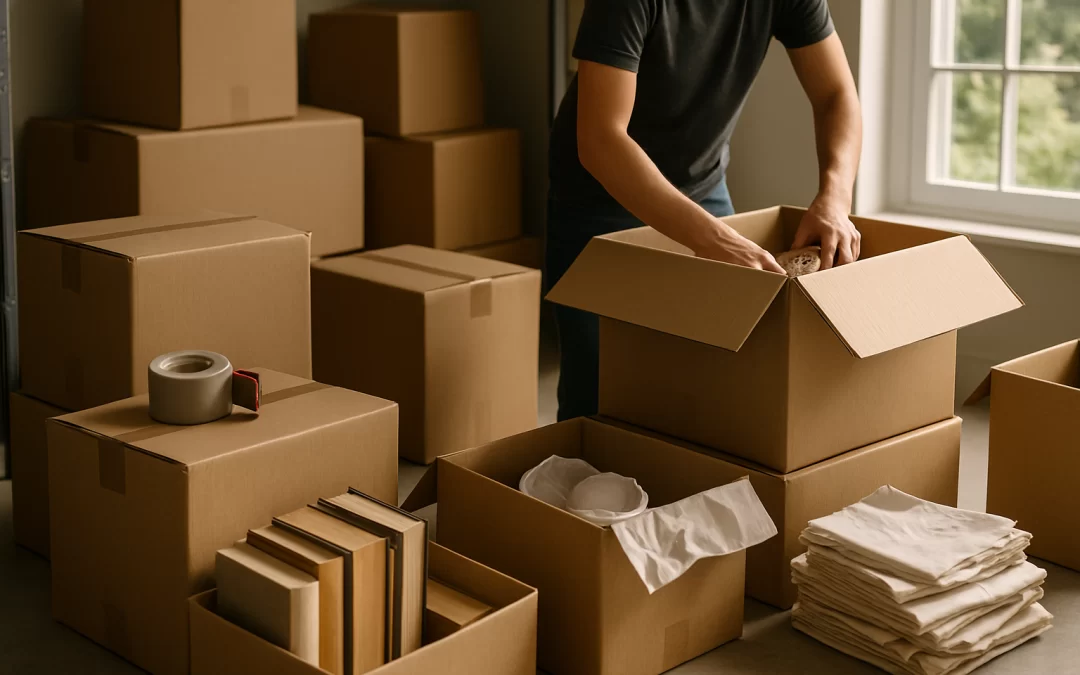
Cheap moving boxes are easiest to find by combining a few strategies: buying basic boxes in bulk, picking up free used boxes locally, and reusing containers you already own. Most people can cover a small apartment move for $50–$150 in packing supplies if they plan ahead, while a larger home may spend $150–$400. You’ll save the most by mixing free and low-cost options, but the tradeoff is extra time spent hunting for boxes and checking their condition so your belongings stay protected.
Moving is stressful enough without worrying about how you’ll pack everything safely and affordably. This guide is for anyone planning a local or long-distance move who wants to cut costs on boxes and packing supplies without risking damage to their belongings. You’ll find clear steps, realistic price ranges, and help deciding when to DIY and when to bring in professional movers.
Table of Contents
- What Cheap Moving Boxes and Packing Supplies Involve
- Common Challenges and Mistakes When Finding Cheap Moving Boxes
- What to Do First: Step-by-Step Plan for Affordable Packing Supplies
- Where to Find Cheap or Free Moving Boxes
- What to Expect: Timeline, Effort, and Logistics
- Cheap Boxes, DIY Packing, and When to Hire Movers
- Moving Costs, Quotes, and How Boxes Affect Your Budget
- Ways to Save Money on Boxes and Packing Supplies
- What Can Go Wrong and How to Avoid It
- Frequently Asked Questions
- Summary: Key Takeaways and Next Steps
What Cheap Moving Boxes and Packing Supplies Involve
Finding cheap moving boxes is about balancing cost, quality, and convenience. You want boxes that are strong enough to protect your belongings, but not so expensive that they blow your moving budget.
Most people use a mix of:
- New boxes from home improvement stores, moving companies, or online retailers
- Free or used boxes from local stores, neighbors, or online marketplaces
- Reusable containers like suitcases, totes, and drawers
- Basic packing supplies such as tape, markers, bubble wrap, and packing paper
The right mix depends on how far you’re moving, how fragile your items are, and how much time you have to prepare.
Typical packing supply list
For a small apartment or 1-bedroom, you’ll usually need:
- 15–25 small boxes (books, pantry items, tools)
- 10–20 medium boxes (kitchen, decor, clothing)
- 5–10 large boxes (bedding, pillows, light bulky items)
- Wardrobe boxes (optional, 2–4 for hanging clothes)
- 2–4 rolls of packing tape
- 1–2 large rolls of bubble wrap or foam
- 1–2 bundles of packing paper or newsprint
- Permanent markers and labels
Larger homes will need more of everything, especially medium and large boxes.
Common Challenges and Mistakes When Finding Cheap Moving Boxes
Trying to save money on boxes can backfire if you’re not careful. Here are the most common issues people run into.
Using weak or damaged boxes
- Old boxes can collapse under weight, especially if they’ve been wet or overused.
- Grocery and liquor store boxes may have hidden damage or be too small for efficient packing.
- Weak boxes increase the risk of broken items and slow down movers who have to handle them more carefully.
Underestimating how many boxes you need
- Many people run out of boxes the night before moving day and end up overstuffing the ones they have.
- Overpacked boxes are harder to lift and more likely to tear or cause injuries.
- Last-minute box runs usually mean paying higher prices and wasting time.
Ignoring the cost of packing supplies
- Buying bubble wrap, tape, and specialty boxes one at a time adds up quickly.
- Cheap tape that doesn’t stick well can cause boxes to open during the move.
- Not having enough padding leads to broken dishes, electronics, and decor.
Not matching box types to items
- Putting books in large boxes makes them too heavy to lift safely.
- Packing fragile items in oversized boxes without enough padding leaves them vulnerable.
- Skipping dish or wardrobe boxes can make packing and unpacking much harder.
What to Do First: Step-by-Step Plan for Affordable Packing Supplies
Before you start collecting boxes, take a few simple steps to avoid overspending and last-minute stress.
Step 1: Declutter before you pack
- Walk through each room and set aside items to donate, sell, recycle, or throw away.
- Focus on bulky, heavy, or rarely used items—these cost the most to move.
- Fewer belongings mean fewer boxes, less packing time, and lower moving costs.
Step 2: Estimate how many boxes you’ll need
Use these rough guidelines:
- Studio/efficiency: 15–25 boxes total
- 1-bedroom: 25–40 boxes
- 2-bedroom: 40–60 boxes
- 3-bedroom: 60–80+ boxes
Add more if you have a lot of books, decor, or storage items. It’s better to have a few extra boxes than to scramble at the last minute.
Step 3: Decide what must be new vs. what can be used
- New, sturdy boxes are best for:
- Dishes and glassware
- Electronics
- Heavy books
- Valuable or fragile items
- Used or free boxes are usually fine for:
- Linens and towels
- Clothing (folded)
- Plastic toys
- Non-breakable kitchen items
Step 4: Set a realistic packing supply budget
Typical ranges for boxes and basic supplies (not including movers):
- Studio/1-bedroom: $50–$150
- 2–3 bedroom home: $150–$300
- Larger homes or long-distance moves: $250–$400+
If you’re very flexible and willing to hunt for free boxes, you can often stay at the low end of these ranges.
Where to Find Cheap or Free Moving Boxes
Combining several sources usually gives you the best mix of cost, quality, and convenience.
1. Home improvement and big-box stores
Stores like Home Depot, Lowe’s, Walmart, and similar chains sell new moving boxes in standard sizes.
- Pros: Consistent sizes, strong boxes, easy to stack in a truck, often sold in bundles.
- Cons: Not the absolute cheapest option, specialty boxes (wardrobe, dish) cost more.
- Typical prices: About $1–$3 per box depending on size and type.
2. Online retailers and moving supply companies
Online sellers offer moving kits with a set number of boxes and supplies for different home sizes.
- Pros: Convenient delivery, bundled discounts, clear estimates of how many boxes you’ll get.
- Cons: Shipping costs, you may end up with a few sizes you don’t use.
- Best for: People with limited time who want everything delivered at once.
3. Local grocery, liquor, and retail stores (free or very cheap)
Many stores recycle boxes daily and are willing to give them away if you ask politely.
- Ask for sturdy boxes that held canned goods, wine, or bottled drinks.
- Avoid boxes that smell strongly of food or have visible stains or damage.
- Call ahead and ask what days and times they usually unpack shipments.
4. Online marketplaces and community groups
Check local listings on:
- Facebook Marketplace
- Nextdoor
- Craigslist “free” section
- Neighborhood or building group chats
Many people give away moving boxes right after their own move. Inspect them for damage and bugs before bringing them inside your home.
5. Friends, family, and coworkers
- Ask around at work or in your social circle—someone may have boxes from a recent move.
- Offer to pick them up at a convenient time and return any specialty boxes if requested.
- This is often the fastest way to get a starter set of boxes for free.
6. Rental and reusable plastic bins
In some cities, companies rent reusable plastic moving crates.
- Pros: Very sturdy, stack well, no tape needed, eco-friendly.
- Cons: Not always cheaper than cardboard, limited availability by location.
- Best for: Short-distance moves where you can return the crates easily.
7. Reusing what you already own
Before you buy more boxes, look around your home for containers you can safely move:
- Suitcases and duffel bags (great for clothing and linens)
- Plastic storage bins
- Laundry baskets (for light, bulky items)
- Desk drawers and dresser drawers (if movers approve and weight is reasonable)
Label these just like boxes so you know what’s inside when you unpack.
What to Expect: Timeline, Effort, and Logistics
Planning ahead with boxes and supplies makes the rest of your move smoother.
When to start collecting boxes
- 4–6 weeks before moving day: Start gathering free boxes and ordering any kits you need.
- 3–4 weeks before: Buy any specialty boxes (wardrobe, dish, TV) and extra tape.
- 2 weeks before: You should have 90–100% of your boxes ready to go.
How long packing usually takes
- Studio/1-bedroom: 1–3 full days of focused packing.
- 2–3 bedroom home: 3–6 days, depending on how much you own and how organized you are.
- Larger homes: 1–2 weeks of part-time packing.
Spreading packing over several evenings and weekends is less stressful than trying to do it all at once.
Labeling and organizing boxes
- Label each box with:
- Room (e.g., “Kitchen”)
- Short description (“Pots and pans”)
- “Fragile” or “Heavy” if needed
- Use a simple numbering system (Box 1 of 10, Box 2 of 10, etc.) for each room.
- Keep a short list or photo record of high-value items and which boxes they’re in.
Cheap Boxes, DIY Packing, and When to Hire Movers
Saving money on boxes is helpful, but your biggest moving cost decision is whether to hire movers or do it yourself.
When DIY makes sense
DIY (doing it yourself) is often a good fit if:
- You’re moving a small place (studio or 1-bedroom) with minimal furniture.
- You have access to a truck or can rent one cheaply.
- You have friends or family who can help with heavy lifting.
- You’re comfortable handling the physical work and logistics.
In these cases, cheap or free boxes can significantly reduce your total moving cost.
When hiring movers is worth it
Professional movers are usually the better choice if:
- You’re moving a 2+ bedroom home or have a lot of heavy furniture.
- You’re moving long-distance or across state lines.
- You have limited time, physical limitations, or safety concerns.
- You own fragile, valuable, or bulky items like pianos, large TVs, or antiques.
Even if you hire movers, you can still save by packing your own boxes and only paying for loading, transport, and unloading.
Partial-service options
You don’t have to choose all-or-nothing. Many people:
- Pack their own boxes using cheap supplies.
- Hire movers only for heavy items and large furniture.
- Use moving pods or storage containers and load them themselves while a company handles transport.
If you’re considering portable storage containers, it can help to review storage pods vs. moving trucks pros and cons and essential tips before using moving pods so you choose the right option for your budget and timeline.
Moving Costs, Quotes, and How Boxes Affect Your Budget
Boxes are just one part of your overall moving cost. Understanding the full picture helps you decide where to save and where to spend.
Typical moving cost ranges
- Local move (same city or nearby): About $300–$1,500 depending on home size, hours worked, and number of movers.
- Long-distance move: About $2,000–$8,000+ depending on distance, weight, and services.
- Full-service move (packing + moving): Higher than standard moves; can add several hundred to several thousand dollars.
What affects moving costs
- Distance: Longer moves cost more in fuel, time, and logistics.
- Size and weight: More rooms and heavier items mean higher costs.
- Timing: Weekends, end-of-month, and summer are usually more expensive.
- Services: Packing, unpacking, furniture assembly, and storage all add to the total.
Hidden fees to watch for
- Stair or elevator fees for multi-story buildings.
- Long carry fees if movers must walk far from truck to door.
- Fees for heavy or specialty items (pianos, safes, large appliances).
- Last-minute booking or rescheduling charges.
- Extra charges for packing materials if movers provide boxes and supplies.
Why moving quotes vary
Different companies use different pricing models and include different services in their estimates.
- Some quotes include basic supplies like blankets and tape; others charge separately.
- Hourly rates vs. flat-rate pricing can make quotes look very different.
- Reputation, insurance coverage, and experience also affect price.
How to get accurate moving estimates
- Be honest and detailed about what you’re moving, including stairs, elevators, and parking situation.
- Mention if you’re providing your own boxes and packing most items yourself.
- Ask for a written estimate that clearly lists:
- Hourly rates or flat rate
- What supplies are included
- Any potential extra fees
- Get at least 3 quotes so you can compare prices and services fairly.
Ways to Save Money on Boxes and Packing Supplies
You don’t have to sacrifice safety to keep costs down. Focus on smart tradeoffs.
Prioritize where to spend
- Buy new, sturdy boxes for:
- Dishes and glassware
- Electronics
- Heavy books
- Fragile decor
- Use free or used boxes for:
- Clothing
- Linens
- Plastic toys
- Non-breakable items
Use household items as padding
- Wrap fragile items in:
- Towels
- T-shirts and sweaters
- Blankets
- Dishcloths and napkins
- Use these instead of buying as much bubble wrap or foam.
- Just avoid using newspaper directly on items that can stain, like light-colored fabrics or dishes.
Buy in bulk when possible
- Look for bundle deals on boxes and tape at home improvement stores or online.
- Buying a moving kit for your home size can be cheaper than buying everything individually.
- Share leftover boxes with friends or neighbors to reduce waste.
Pack efficiently
- Fill boxes fully so they don’t crush when stacked, but keep them liftable.
- Put heavy items at the bottom and lighter items on top.
- Use small boxes for books and heavy items to avoid injuries and damage.
What Can Go Wrong and How to Avoid It
Cutting corners on boxes and supplies can lead to bigger problems on moving day. Here’s what to watch for.
Box failures and broken items
- Overused or weak boxes can split open when lifted.
- Boxes stored in damp areas may look fine but fail under weight.
- Prevention: Test used boxes by pressing on the bottom and sides; double-tape the bottom of any box carrying heavy items.
Pest and odor issues
- Free boxes from grocery stores can sometimes carry bugs or strong food smells.
- These can transfer to your belongings or new home.
- Prevention: Inspect all free boxes carefully; avoid boxes with stains, crumbs, or strong odors.
Injury and safety risks
- Overpacked boxes are a common cause of back and shoulder injuries.
- Unlabeled boxes make it harder to stack safely and find essentials quickly.
- Prevention: Keep boxes under a comfortable lifting weight (usually 40–50 pounds max) and label all sides clearly.
Last-minute stress and extra costs
- Running out of boxes the night before your move leads to rushed packing and poor protection.
- Last-minute store runs often mean paying higher prices and buying more than you need.
- Prevention: Start early, overestimate slightly, and keep a small reserve of extra boxes and tape.
Frequently Asked Questions
How many moving boxes do I really need?
Most people need about 15–25 boxes for a studio, 25–40 for a 1-bedroom, 40–60 for a 2-bedroom, and 60–80+ for a 3-bedroom home. If you have a lot of books, decor, or storage items, plan on the higher end of these ranges. It’s safer to have a few extra boxes than to run out at the last minute.
Are free moving boxes safe to use?
Free boxes can be safe if they’re clean, dry, and structurally sound. Avoid boxes with stains, strong odors, or signs of pests, and don’t use weak or damaged boxes for heavy or fragile items. When in doubt, use free boxes for clothing and linens, and buy new boxes for dishes and valuables.
Is it cheaper to buy a moving kit or individual boxes?
Moving kits are often cheaper and more convenient if you’re starting from scratch and need a full set of boxes and supplies. If you already have some boxes or can get free ones, buying individual sizes to fill the gaps may cost less. Compare the total price of a kit to what you’d spend on just the sizes you need most.
Can I use trash bags instead of boxes for clothes?
Trash bags can work for soft items like clothing or bedding, but they don’t stack well and can tear easily. They also offer little protection if something heavy is placed on top. If you use them, label them clearly and avoid overfilling so they’re easier to carry.
When should I start collecting moving boxes?
Start looking for boxes 4–6 weeks before your move, especially if you want to find free or low-cost options. This gives you time to gather what you need gradually and avoid last-minute stress. Aim to have nearly all your boxes ready at least 2 weeks before moving day.
Do movers care if I use different sizes and types of boxes?
Movers can work with mixed boxes, but consistent sizes make loading the truck faster and safer. Very weak or odd-shaped boxes can slow things down and increase the risk of damage. If you’re hiring movers, try to use sturdy, closable boxes for most items and keep very fragile items in clearly labeled, well-padded boxes.
Summary: Key Takeaways and Next Steps
Cheap moving boxes are easiest to find when you combine free sources, bulk purchases, and containers you already own. Plan on spending roughly $50–$150 on supplies for a small place and $150–$400+ for larger homes, depending on how many new boxes and specialty supplies you buy. Start early, prioritize sturdy boxes for fragile items, and use free or used boxes for clothing and linens.
As you plan your move, remember that boxes are only one part of your total moving cost. Getting several moving quotes, understanding what’s included, and deciding how much you’ll pack yourself can make a bigger difference than any single box source. If you’d like to reduce stress and keep costs under control, compare a few movers early, decide how much you want to DIY, and build your packing plan around that choice.
Taking the time now to organize your packing supplies, estimate your box needs, and request multiple moving quotes will help you avoid last-minute surprises. With a clear plan, realistic budget, and the right mix of cheap moving boxes, you can make your move more manageable and stay in control of your costs.
About the Author
This article was written by the team at Rex Direct, the owners of QuickMovingQuotes.com.
Rex Direct supports businesses and consumers throughout the moving industry by providing technology and data solutions that help homeowners compare moving services, understand pricing, and make informed relocation decisions.
Through their work with movers, relocation platforms, and lead generation services, the Rex Direct team has developed extensive insight into how interstate moving companies operate and how consumers can protect themselves during the moving process.