
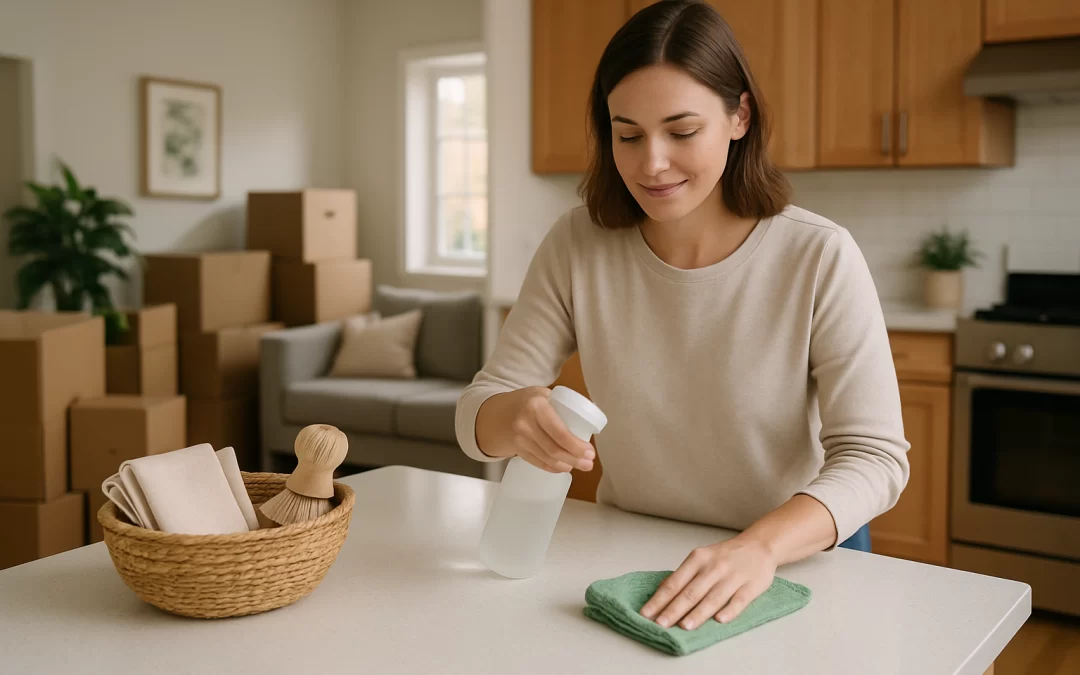
Best eco-friendly move-in cleaning products are non-toxic, plant-based, and free from harsh chemicals like chlorine bleach, ammonia, and synthetic fragrances. For most homes, you can clean effectively with a small set of products: a multi-surface cleaner, bathroom cleaner, floor cleaner, glass cleaner, and a disinfecting option that’s still family-safe. Expect to spend $40–$100 to stock up for a full move-in clean, plus several hours of work depending on home size. The main tradeoff is that some green products may require a bit more scrubbing time than strong chemical cleaners, but they’re safer for kids, pets, and people with allergies.
Moving into a new place is stressful enough without worrying about chemical fumes or residue left behind from harsh cleaners. Eco-friendly move-in cleaning products help you start fresh in a way that’s safer for your family and the environment. This guide walks you through what to buy, how to use it, and how to fit cleaning into your overall moving plan, including when it makes sense to hire movers and get quotes.
Table of Contents
- What Eco-Friendly Move-In Cleaning Involves
- Common Challenges and Mistakes with Eco Move-In Cleaning
- Best Eco-Friendly Move-In Cleaning Products (Room by Room)
- What to Do First: Step-by-Step Eco Move-In Cleaning Plan
- Timeline, Effort, and Logistics Around Moving Day
- When to Hire Movers vs DIY for an Eco-Friendly Move
- How to Compare Moving Quotes and Plan Around Cleaning
- Ways to Save Money on Moving and Move-In Cleaning
- What Can Go Wrong and How to Avoid It
- Frequently Asked Questions
- Summary and Next Steps
What Eco-Friendly Move-In Cleaning Involves
Eco-friendly move-in cleaning focuses on using products and methods that are safer for people and the planet while still getting your new home truly clean. Instead of harsh chemicals, you rely on plant-based ingredients, mineral cleaners, and simple tools like microfiber cloths and reusable mop pads.
For most apartments and homes, eco move-in cleaning includes:
- Wiping down all surfaces (counters, cabinets, shelves, doors, baseboards)
- Deep-cleaning bathrooms (toilet, tub, shower, sink, grout)
- Cleaning the kitchen (appliances, sink, counters, cabinets, fridge)
- Vacuuming and mopping floors with non-toxic solutions
- Cleaning windows, mirrors, and glass without streaky chemicals
- Targeted disinfecting in high-touch areas (handles, switches, faucets)
The goal is a fresh, low-odor home that feels safe for kids, pets, and anyone with asthma or chemical sensitivities.
Common Challenges and Mistakes with Eco Move-In Cleaning
Even with the best intentions, people often run into problems when trying to clean their new home with greener products.
Typical challenges
- Underestimating time: A full move-in clean can take 4–10 hours depending on home size and condition.
- Buying too many products: It’s easy to overspend on specialty cleaners you don’t really need.
- Old stains and buildup: Mineral deposits, soap scum, and grease can be tougher to remove with gentle products.
- Strong odors from previous cleaners or smoke: Eco products may not mask smells as aggressively as scented chemicals.
- Cleaning while movers are working: Boxes and furniture can get in the way and slow everything down.
Common mistakes to avoid
- Assuming “natural” means “weak” and overusing product (wasting money and leaving residue).
- Skipping test spots on delicate surfaces like stone, unfinished wood, or specialty flooring.
- Not ventilating just because products are “non-toxic” (fresh air still helps with dust and any scent).
- Trying to clean everything on moving day instead of planning a realistic schedule.
- Ignoring the bigger picture: packing, moving logistics, and whether to hire movers.
Best Eco-Friendly Move-In Cleaning Products (Room by Room)
You don’t need a huge collection of cleaners to get your new place move-in ready. A small, smart set of eco-friendly products can handle almost everything.
How to choose safe, eco-friendly products
Look for:
- Clear ingredient lists: Plant-based surfactants, mineral cleaners, essential oils (if you tolerate fragrance).
- Free from: Chlorine bleach, ammonia, phthalates, synthetic dyes, and heavy synthetic fragrances.
- Certifications (where available): Third-party eco labels, fragrance-free or hypoallergenic options.
- Concentrates: Refillable or concentrated formulas reduce plastic waste and often save money.
Core eco-friendly cleaning kit for move-in day
For most homes, this basic kit is enough:
- All-purpose multi-surface cleaner (plant-based)
- Bathroom cleaner with limescale/soap scum power (citric acid or similar)
- Glass and mirror cleaner (vinegar-based or alcohol-based, low-odor)
- Floor cleaner safe for your flooring type (wood, tile, vinyl, laminate)
- Disinfecting option (e.g., hydrogen peroxide or botanical disinfectant) for high-touch areas
- Baking soda for gentle scrubbing
- Castile soap or mild dish soap for general cleaning and degreasing
Eco-friendly products for the kitchen
Focus on degreasing and food-safe surfaces.
- Plant-based degreaser: For stove, range hood, and greasy cabinets.
- Fridge-safe cleaner: Mild, unscented cleaner or diluted castile soap for shelves and drawers.
- Stainless steel cleaner: If needed, choose a non-toxic formula or use diluted vinegar and a microfiber cloth.
- Dish soap: Mild, biodegradable soap for wiping surfaces and soaking parts.
Eco-friendly products for bathrooms
Bathrooms often need more targeted cleaning power.
- Citrus or citric-acid-based bathroom cleaner: Helps with soap scum and mineral deposits.
- Non-chlorine toilet cleaner: Plant-based or mineral-based formulas.
- Baking soda paste: For tubs, sinks, and grout stains.
- Hydrogen peroxide spray: For spot disinfecting and mildew stains (test on surfaces first).
Eco-friendly products for floors
- Hardwood or laminate: Use a cleaner labeled safe for sealed wood/laminate; avoid soaking floors.
- Tile and vinyl: Mild floor cleaner or diluted castile soap; avoid overly soapy solutions.
- Carpet: Low-toxicity carpet spot cleaner; consider renting a machine that allows eco-friendly solutions.
Tools that make eco cleaning easier
- Microfiber cloths (reusable, great at grabbing dust and grime)
- Scrub brushes (soft and medium bristle)
- Old toothbrush for tight corners and grout
- Spray bottles for diluting concentrates
- Bucket and mop with washable pads
- HEPA vacuum if you have allergies or pets
What to Do First: Step-by-Step Eco Move-In Cleaning Plan
Cleaning is much easier before your belongings arrive. If possible, schedule access to your new place at least a day before the move.
Step 1: Walk-through and prioritize
- Do a quick walk-through and note the dirtiest areas (often bathrooms and kitchen).
- Check for any damage, mold, or issues that cleaning alone can’t fix.
- Decide which rooms must be ready first (usually bedrooms, bathroom, and kitchen).
Step 2: Gather your eco cleaning kit
- Pack your cleaning products in a clearly labeled “Open First – Cleaning” box.
- Include gloves, cloths, trash bags, and paper towels or reusable towels.
- Bring a small step stool if you need to reach high cabinets and fans.
Step 3: Start with dry cleaning (dust and vacuum)
- Dust from top to bottom: ceiling corners, fans, light fixtures, shelves, and baseboards.
- Vacuum floors, vents, and inside closets to remove dust and debris.
- Open windows if possible to air out the space.
Step 4: Deep-clean bathrooms
- Spray shower, tub, and sink with eco bathroom cleaner and let it sit.
- Scrub fixtures, grout lines, and any visible buildup with brushes and baking soda if needed.
- Clean the toilet last using a non-toxic toilet cleaner and dedicated brush.
- Finish with mirrors and high-touch areas like handles and switches.
Step 5: Clean the kitchen
- Empty and clean the fridge: remove shelves and drawers, wash with mild soap, and dry thoroughly.
- Degrease the stove, oven exterior, and range hood with a plant-based degreaser.
- Wipe inside cabinets and drawers before putting in dishes or food.
- Clean counters, sink, and backsplash with an all-purpose cleaner.
Step 6: Windows, glass, and surfaces
- Clean windows and mirrors with eco glass cleaner and a lint-free cloth.
- Wipe doors, door frames, light switches, and outlet covers.
- Spot-disinfect high-touch areas with hydrogen peroxide or botanical disinfectant.
Step 7: Floors last
- Vacuum again if needed, especially corners and edges.
- Mop hard floors with an eco floor cleaner suited to your flooring.
- Let floors dry fully before movers bring in furniture if timing allows.
Timeline, Effort, and Logistics Around Moving Day
Eco-friendly move-in cleaning takes planning, especially when you’re also managing movers, packing, and utilities.
How long does eco move-in cleaning take?
Typical time ranges:
- Studio or 1-bedroom apartment: 3–5 hours of focused cleaning
- 2–3 bedroom home: 5–8 hours
- Larger homes (4+ bedrooms): 8–12 hours or more, possibly over two days
If you’re working alone and also handling parts of the move, expect to spread cleaning over several sessions.
How to fit cleaning into your moving schedule
- Try to get keys 1 day before the move to clean an empty home.
- If that’s not possible, clean priority areas (bathroom, one bedroom, part of the kitchen) first.
- Coordinate with movers so you’re not mopping while they’re carrying boxes through wet floors.
- Keep a small cleaning kit accessible for quick touch-ups after the move.
When to Hire Movers vs DIY for an Eco-Friendly Move
Choosing between hiring movers and doing it yourself affects how much time and energy you have for eco move-in cleaning.
When hiring movers makes sense
Consider professional movers if:
- You have a larger home (2+ bedrooms) or a lot of heavy furniture.
- You want to reserve your energy for cleaning, unpacking, and settling in.
- You’re moving long-distance and can’t easily make multiple trips.
- You have young children, pets, or health issues that limit how much you can lift.
When DIY moving might work
DIY can be reasonable if:
- You’re moving a small apartment or minimal furniture.
- You have access to a truck and reliable help from friends or family.
- You’re comfortable managing both the move and the cleaning schedule.
Keep in mind that DIY moving can take longer and leave you more tired, which may delay your deep cleaning plans.
Balancing eco cleaning with moving help
- If budget allows, hiring movers can free up a full day for you to focus on eco-friendly cleaning.
- For some families, a mix works best: hire movers for heavy items, handle boxes and cleaning yourself.
- If you’re short on time, you might also consider professional move-in cleaning with eco-friendly products; you can learn more about what to expect from professional move-out and move-in cleaning services.
How to Compare Moving Quotes and Plan Around Cleaning
Moving costs can vary widely, and your choice affects how much time and energy you have for eco cleaning.
Typical moving cost ranges
- Local move (same city or nearby): About $300–$1,500, depending on home size, hours, and crew size.
- Long-distance move: Often $2,000–$8,000+ depending on distance, weight, and services.
- Full-service moving (packing, loading, transport, unloading, sometimes unpacking): Higher than standard moves, with price driven by how much work movers handle for you.
What affects moving costs
- Distance: Longer moves cost more in fuel, time, and logistics.
- Size and weight: More rooms and heavier items increase cost.
- Timing: Weekends, month-end, and peak seasons (summer) are usually more expensive.
- Services: Packing, unpacking, storage, and specialty item handling add to the total.
Hidden fees to watch for
- Stair or elevator fees
- Long carry fees if the truck can’t park close
- Heavy item surcharges (pianos, safes, large appliances)
- Last-minute booking or rescheduling fees
- Fuel surcharges or tolls
Why quotes vary and how to get accurate estimates
- Different companies estimate time and weight differently, and include different services.
- Some quotes are “ballpark” while others are binding or not-to-exceed; always ask which type you’re getting.
- Provide detailed information: number of rooms, large items, stairs, parking situation, and your preferred dates.
- Ask movers how long they expect the job to take so you can plan your cleaning around it.
When to get quotes and how many to compare
- Start requesting quotes 4–8 weeks before your move, earlier for long-distance or peak season.
- Compare at least 3 quotes to understand the typical price range for your situation.
- Use the quote details to decide whether you’ll have time and energy left for eco move-in cleaning or if you should budget for cleaning help.
Ways to Save Money on Moving and Move-In Cleaning
You can stay eco-conscious and budget-conscious with a few smart choices.
Saving on eco-friendly cleaning products
- Buy concentrates and dilute them yourself instead of multiple ready-to-use bottles.
- Use multi-purpose products that work on several surfaces.
- Rely on low-cost basics like baking soda and vinegar where appropriate.
- Invest in reusable tools (microfiber cloths, mop pads) instead of disposable wipes.
Saving on moving costs
- Declutter before you move so you’re not paying to transport items you don’t need.
- Be flexible with your move date if possible to avoid peak days and times.
- Pack most boxes yourself and let movers handle heavy furniture and loading.
- Get multiple quotes and compare what’s included, not just the bottom-line price.
When paying for help is worth it
- If hiring movers saves you a full day of physical work, you may be able to handle eco cleaning yourself.
- If you’re short on time, consider a professional move-in clean that uses non-toxic products, then maintain it with your own eco-friendly kit.
- For some families, a combination of movers plus a one-time cleaning service is less stressful than trying to DIY everything.
What Can Go Wrong and How to Avoid It
Planning ahead helps you avoid common problems with eco move-in cleaning and moving logistics.
Cleaning-related issues
- Stubborn stains or odors: Some old stains, smoke smells, or pet odors may not fully disappear with gentle cleaners alone. In these cases, you may need targeted treatments or professional help.
- Product reactions: Even natural ingredients can cause allergies or irritation for some people; test new products in small areas and consider fragrance-free options.
- Surface damage: Using acidic cleaners on natural stone or the wrong product on wood can cause damage; always check labels and test first.
Moving and timing issues
- Movers arriving early or late, throwing off your cleaning schedule.
- Rain or bad weather making floors dirty right after you’ve cleaned them.
- Underestimating how tired you’ll be after moving, leaving no energy for deep cleaning.
How to reduce risk
- Build buffer time into your schedule for both moving and cleaning.
- Keep a small “day one” cleaning kit separate so you can handle essentials even if plans change.
- Confirm details with your movers in writing: date, arrival window, services, and any special conditions.
- Consider professional move-in cleaning if your new home is in rough shape or you have very limited time; understanding when to hire professional cleaning help can guide that decision.
Frequently Asked Questions
Are eco-friendly cleaning products strong enough for a deep move-in clean?
Yes, high-quality eco-friendly products can handle most move-in cleaning tasks, especially when combined with good tools and a bit of scrubbing. Very old stains, heavy mineral buildup, or smoke damage may need extra effort or professional treatment, but for typical dirt and grime, non-toxic cleaners work well.
How much should I budget for eco-friendly move-in cleaning supplies?
For a full move-in clean, most people spend between $40 and $100 on eco-friendly products and basic tools. If you already own some supplies, you may only need to add a few specialty items like bathroom cleaner or a floor solution safe for your new home’s surfaces.
Should I clean before or after the movers arrive?
It’s best to do as much deep cleaning as possible before movers arrive, especially bathrooms, kitchen surfaces, and floors. After the move, you can do quick touch-ups where boxes or furniture scuffed walls or floors, and clean any areas you couldn’t reach earlier.
Is it worth hiring movers if I want time for eco move-in cleaning?
Hiring movers can free up several hours (or a full day) that you can dedicate to cleaning your new home thoroughly with non-toxic products. If your budget allows, this can reduce stress and help you settle into a cleaner, healthier space faster, especially for larger homes or long-distance moves.
Can I ask a cleaning service to use eco-friendly products?
Many cleaning companies offer green or non-toxic options, but you should always ask in advance and confirm what they use. Some will use your preferred products if you provide them, which can be a good way to ensure everything meets your family’s needs and sensitivities.
When should I start getting moving quotes if I also need to plan cleaning?
Start getting moving quotes 4–8 weeks before your move so you can lock in a date and plan your cleaning around it. Once you know your move-in day and time, you can schedule deep cleaning for the day before or early the same day, depending on access to your new home.
Summary and Next Steps
Eco-friendly move-in cleaning lets you start life in your new home with fewer harsh chemicals and a fresher, safer environment. With a small set of non-toxic products, a realistic plan, and enough time, you can handle most cleaning yourself, though you may still choose professional help for heavy buildup or tight schedules.
Expect to spend several hours cleaning and $40–$100 on supplies, plus your moving costs, which typically range from $300–$1,500 for local moves and $2,000–$8,000+ for long-distance moves. The key is to decide early whether to hire movers, get at least three quotes, and book in advance so you can reserve your energy for cleaning and settling in.
As you plan your move, consider how much time and energy you realistically have for both moving and eco-friendly cleaning. Getting multiple moving quotes now will help you compare options, control costs, and choose the balance of DIY and professional help that fits your family best.
About the Author
This article was written by the team at Rex Direct, the owners of QuickMovingQuotes.com.
Rex Direct supports businesses and consumers throughout the moving industry by providing technology and data solutions that help homeowners compare moving services, understand pricing, and make informed relocation decisions.
Through their work with movers, relocation platforms, and lead generation services, the Rex Direct team has developed extensive insight into how interstate moving companies operate and how consumers can protect themselves during the moving process.