
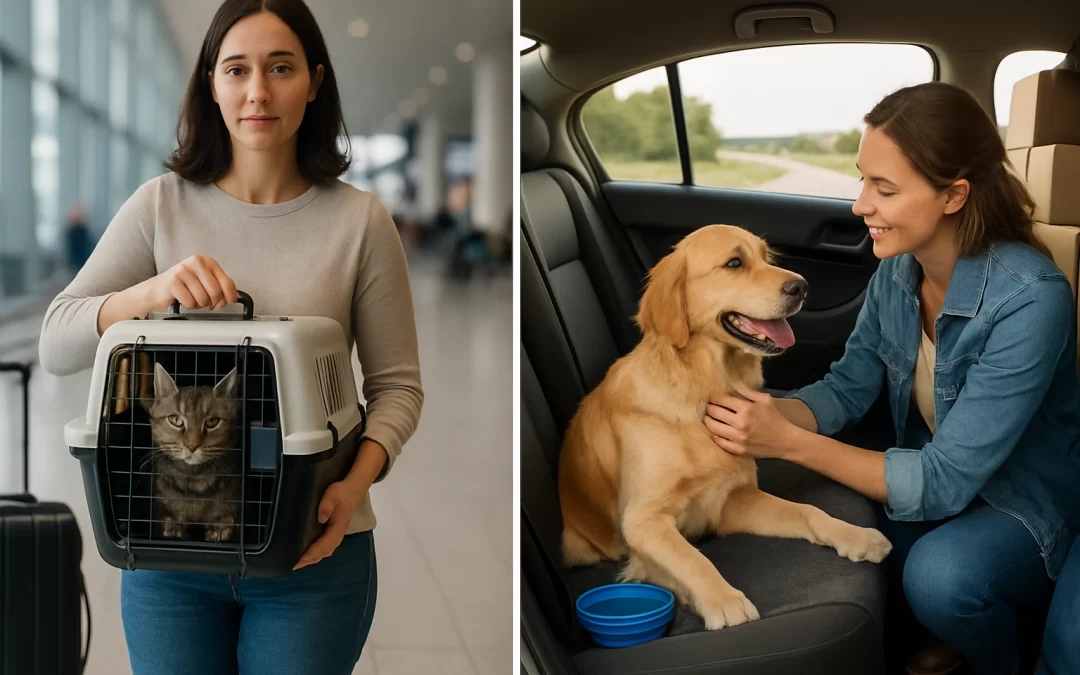
Flying vs. road tripping with pets during a long-distance move comes down to your pet’s health, temperament, and your timeline. Road trips are usually safer and less stressful for most pets because you control the environment, schedule, and breaks, but they take more time and planning. Flying can be faster and sometimes necessary for very long-distance or international moves, yet it can be more stressful and expensive, especially for large dogs that must fly in cargo. In many cases, the best option is the one that keeps your pet’s routine as stable as possible while fitting your moving budget and schedule.
Moving with pets adds an emotional layer to an already stressful process. You’re not just moving boxes; you’re responsible for keeping a living, feeling family member safe and calm. This guide is for people planning a long-distance move who are unsure whether to fly or drive with their pets and want clear, realistic guidance on safety, cost, and logistics. By the end, you’ll know what to expect, what to watch out for, and when it makes sense to get professional moving quotes.
Table of Contents
- What Moving Long-Distance With Pets Involves
- Flying vs. Road Tripping With Pets: Overview
- Common Challenges and Mistakes When Moving With Pets
- What to Do First: Step-by-Step Planning
- What to Expect: Timeline, Effort, and Logistics
- When to Hire Movers vs. DIY for a Pet-Involved Move
- How to Compare Moving Quotes for a Pet-Friendly Move
- Ways to Save Money When Moving With Pets
- What Can Go Wrong and How to Avoid It
- Frequently Asked Questions
- Summary and Next Steps
What Moving Long-Distance With Pets Involves
Moving long-distance with pets means planning for two moves at once: yours and your pet’s. You have to coordinate your travel, your belongings, and your pet’s safety, comfort, and legal requirements.
Key parts of a pet-involved move include:
- Choosing how your pet will travel (car, plane, or a mix of both).
- Scheduling vet visits for vaccines, health certificates, and medications.
- Arranging pet-safe accommodations along the route or at your destination.
- Coordinating with movers so your pet is safe on packing and moving days.
- Helping your pet adjust to a new home and routine after arrival.
For a deeper dive into behavior and comfort, you can review essential tips for moving with pets to help you prepare your pet emotionally and physically.
Flying vs. Road Tripping With Pets: Overview
When Road Tripping With Pets Is Usually Better
For many families, driving is the safer and more comfortable option for pets, especially dogs and cats that are used to car rides. You stay in control of temperature, noise, and timing, and you can stop when your pet needs a break.
Road tripping is often better if:
- Your pet is anxious, older, or has health issues.
- You’re moving within the same country and the drive is manageable in 1–4 days.
- You want to keep your pet with you at all times instead of in cargo.
- You prefer to avoid airline restrictions and seasonal temperature rules.
When Flying With Pets Might Make More Sense
Flying can be the right choice when distance or time makes driving unrealistic. This is common for cross-country moves that would take a week by car, or for international relocations.
Flying may be better if:
- You’re moving very far (coast-to-coast, Alaska, Hawaii, or overseas).
- You have limited time off work and need to complete the move quickly.
- Your pet is small enough to fly in-cabin under the seat in front of you.
- You can choose a pet-friendly airline and direct flights.
Key Safety Considerations: Flying vs. Driving
Safety should be your first filter when deciding between flying and driving with pets.
- Driving safety: Most pets do well in a secured crate or harness in the back seat, with regular breaks for water and bathroom needs. The main risks are heat in parked cars, motion sickness, and escape during stops.
- Flying safety: In-cabin travel is generally safer than cargo, but space is limited. Cargo travel can be stressful and risky for brachycephalic (short-nosed) breeds, very young or old pets, and pets with breathing or heart issues.
Always talk to your vet about your specific pet before choosing a travel method, especially if your pet has any medical or behavioral concerns.
Common Challenges and Mistakes When Moving With Pets
Underestimating Stress on Pets
Pets pick up on your stress and the disruption of their routine. Many owners assume their pet will “just adapt,” but sudden changes can lead to anxiety, accidents, or even escape attempts.
Common mistakes include:
- Waiting until the last minute to introduce the travel crate or carrier.
- Skipping practice car rides before a long road trip.
- Not planning a quiet, secure room for pets on packing and moving days.
Last-Minute Travel and Vet Arrangements
Airlines and some states require recent health certificates and proof of vaccinations. These appointments can book up, especially during busy seasons.
Typical oversights:
- Not checking airline pet policies until after booking flights.
- Missing deadlines for health certificates (often within 10 days of travel).
- Not refilling medications or flea/tick preventatives before the move.
Not Coordinating Pet Travel With Movers
Moving day is loud, busy, and full of open doors—exactly the conditions that make pets nervous and more likely to run. A common mistake is leaving pets loose in the home while movers are working.
To avoid problems:
- Plan for pets to stay in a closed room, crate, or with a friend during loading and unloading.
- Tell your movers you have pets and where they will be.
- Keep collars, ID tags, and microchip information up to date.
What to Do First: Step-by-Step Planning
Step 1: Talk to Your Vet
Before you decide on flying or driving, schedule a vet visit. Explain your moving timeline, destination, and how you’re thinking of traveling.
Ask your vet about:
- Whether your pet is healthy enough to fly or handle long car rides.
- Any breed-specific risks (especially for short-nosed dogs and cats).
- Recommended vaccines, parasite prevention, and travel medications.
- Health certificates or paperwork required for your destination.
Step 2: Compare Flying vs. Driving for Your Specific Route
Look at your actual route, distance, and schedule. Then compare both options side by side.
- For driving: Estimate driving hours per day, hotel stops, fuel, food, and any extra days off work.
- For flying: Check airline pet fees, crate requirements, and whether your pet can fly in-cabin or must go in cargo.
- Consider weather: extreme heat or cold can make both car and plane travel riskier.
Step 3: Decide Who Handles the Driving
If you hire movers for your belongings, you’re free to focus on your pet during the trip. If you DIY the move, you’ll be driving a loaded vehicle and managing your pet at the same time.
Ask yourself:
- Can you safely manage a rental truck and a pet for several days?
- Would it be easier to drive your own car with your pet and let movers handle the truck?
- Is there another adult who can help with driving and pet care?
Step 4: Book Movers and Travel Early
Once you know your travel method, lock in your moving and travel dates. This helps you coordinate everything else around firm timelines.
- Book movers 4–8 weeks in advance for local moves and 8–12 weeks for long-distance moves, especially in summer.
- Reserve pet-friendly hotels along your driving route.
- For flights, choose direct routes and avoid extreme temperature times when possible.
Step 5: Prepare Your Pet for Travel
Give your pet time to get used to the carrier, crate, or harness they’ll use during the move.
- Leave the carrier open at home with treats and bedding inside.
- Take short practice car rides and gradually increase the duration.
- Work on basic commands (sit, stay, come) for dogs to improve safety during stops.
What to Expect: Timeline, Effort, and Logistics
Timeline for a Road Trip With Pets
For a long-distance move of 1,000–2,000 miles, most families spend 2–4 days on the road. You’ll need to build in extra time for pet breaks and shorter driving days than you might do alone.
Plan for:
- Stops every 2–4 hours for bathroom breaks, water, and short walks.
- Pet-friendly lodging each night (book ahead, especially with larger dogs).
- Keeping your pet’s feeding schedule as close to normal as possible.
Timeline for Flying With Pets
Flying is faster in travel hours but can be more complex in preparation. You’ll need to arrive early at the airport and allow extra time for check-in and security with a pet.
Expect:
- 1–2 vet visits in the weeks before flying for exams and paperwork.
- Arriving 2–3 hours early for domestic flights, longer for international.
- Time at your destination to help your pet decompress from the flight.
Effort Level: Flying vs. Driving
Driving requires more days of active effort but gives you flexibility. Flying compresses the stress into a shorter window but demands strict adherence to airline rules and schedules.
- Driving effort: Managing your pet’s needs, navigation, and your own fatigue over several days.
- Flying effort: Detailed preparation, paperwork, and managing your pet in crowded, noisy airports.
When to Hire Movers vs. DIY for a Pet-Involved Move
When Hiring Movers Makes Sense
Hiring professional movers can make a big difference when you’re also responsible for a pet’s well-being. It allows you to focus on your pet’s travel and adjustment instead of driving a truck or lifting heavy furniture.
Consider hiring movers if:
- You’re moving long-distance (over 100–150 miles).
- You have a larger home (2+ bedrooms) or heavy items like pianos or safes.
- You’re traveling with multiple pets, children, or both.
- You prefer to drive your own car with your pet instead of a rental truck.
When DIY Might Work
DIY moving can be reasonable for smaller moves and shorter distances, especially if you have help from friends or family. However, you’ll need to be realistic about your time, energy, and your pet’s needs.
DIY might work if:
- You’re moving locally or within a few hours’ drive.
- You have a small apartment or minimal furniture.
- Your pet is calm in the car and can handle a single-day move.
- You’re comfortable driving a rental truck and managing your pet at the same time.
Balancing Pet Needs With Moving Costs
Even if hiring movers costs more upfront, it can reduce risk and stress for both you and your pet. You’ll have more bandwidth to manage vet visits, travel logistics, and helping your pet settle in.
Think about:
- The value of your time and energy during a major life change.
- The potential cost of pet-related emergencies if you’re stretched too thin.
- Whether splitting responsibilities (movers handle belongings, you handle pets) makes the move smoother overall.
How to Compare Moving Quotes for a Pet-Friendly Move
Typical Moving Cost Ranges
Moving costs vary widely, but there are some general ranges you can use as a starting point:
- Local moves: Around $300–$1,500, depending on home size, hours worked, and number of movers.
- Long-distance moves: Often $2,000–$8,000+ based on distance, weight of your shipment, and services.
- Full-service moves: Packing, unpacking, and specialty services can push costs higher, especially for large homes.
These ranges do not include pet travel costs, which you’ll need to budget separately for flights, pet fees, vet visits, and pet-friendly lodging.
What Affects Moving Costs
Several factors influence how much your move will cost:
- Distance: Longer moves cost more in fuel, time, and logistics.
- Size and weight: More rooms and heavier items increase the price.
- Timing: Summer, weekends, and month-end dates are usually more expensive.
- Services: Packing, unpacking, storage, and special handling add to the total.
Hidden Fees to Watch For
When you’re also budgeting for pet travel, surprise moving fees can be especially stressful. Ask movers directly about potential extra charges.
Common add-ons include:
- Stair or elevator fees.
- Long carry fees if the truck can’t park close to your door.
- Fees for heavy or specialty items (pianos, safes, large appliances).
- Last-minute booking or rescheduling fees.
How to Get Accurate Moving Quotes
Accurate quotes help you decide how much you can allocate to pet travel and which moving option fits your budget. Aim to get at least 3–5 quotes from reputable movers.
For better estimates:
- Provide a detailed inventory of your belongings.
- Mention any access issues (stairs, narrow streets, elevators).
- Be clear about your dates, flexibility, and any special items.
- Ask for written estimates and clarify whether they are binding or non-binding.
Ways to Save Money When Moving With Pets
Optimize Your Moving and Travel Dates
Both moving and pet travel can be cheaper on less popular days. If you have flexibility, you can often reduce costs without sacrificing safety.
- Consider weekday moves instead of weekends.
- Avoid peak summer and end-of-month dates if possible.
- Look for off-peak flights that still work for your pet’s schedule.
Reduce the Size of Your Move
The less you move, the less you pay. This can free up budget for safer, more comfortable pet travel options.
- Sell, donate, or recycle items you don’t need before moving.
- Focus on bulky, low-value items that are expensive to transport.
- Use the savings to cover pet fees, better carriers, or extra vet care.
Plan Pet Travel Smartly
You don’t want to cut corners on pet safety, but you can still be strategic about costs.
- Compare airline pet fees and policies if flying.
- Bundle vet services (vaccines, microchipping, health certificates) into one visit when possible.
- Use loyalty programs or discounts for pet-friendly hotels.
What Can Go Wrong and How to Avoid It
Travel Delays and Cancellations
Weather, traffic, and airline issues can disrupt your plans. With pets, delays can quickly become a health or comfort problem.
To reduce risk:
- Build buffer days into your schedule, especially for long-distance moves.
- Pack extra food, medications, and water for your pet.
- Have a backup plan for lodging if you’re delayed on the road.
Pet Anxiety, Illness, or Escape
Stress can cause pets to act in unexpected ways, including hiding, refusing food, or trying to run. Illness can also flare up under pressure.
Prevention tips:
- Use secure, well-ventilated carriers or crates.
- Keep ID tags and microchips current with your new contact information.
- Ask your vet about calming aids or medications if your pet is highly anxious.
Overwhelmed Owners and Rushed Decisions
When you’re overwhelmed, it’s easy to make rushed choices about movers, flights, or routes that don’t truly fit your needs. This can lead to higher costs and more stress for your pet.
To stay in control:
- Start planning early and break tasks into small steps.
- Write down your priorities: pet safety, budget, timing, and convenience.
- Get multiple moving quotes so you’re not forced into a last-minute, high-cost option.
Frequently Asked Questions
Is it safer to fly or drive with my pet during a long-distance move?
For most healthy pets, driving is generally safer and less stressful because you control the environment and can monitor them closely. Flying can be safe when done with a reputable airline and proper preparation, especially for small pets in-cabin, but cargo travel carries more risk and should be discussed with your vet.
How much does it cost to move long-distance with pets?
Expect your household move to cost roughly $2,000–$8,000+ for a long-distance move, depending on distance, home size, and services. On top of that, budget for pet costs such as vet visits, travel crates, airline pet fees or extra hotel nights, which can add several hundred dollars or more.
Can my dog or cat fly in the cabin with me?
Many airlines allow small dogs and cats to fly in-cabin if their carrier fits under the seat and the combined weight meets airline limits. Larger pets usually must fly in cargo, which has more restrictions and risks, so always check the specific airline’s pet policy before booking.
How far can I safely drive with my pet in one day?
Most pets do best with driving days of 6–9 hours, with breaks every 2–4 hours for bathroom needs, water, and short walks. Very long days can increase stress and the risk of overheating or motion sickness, so it’s better to spread a long trip over multiple days when possible.
When should I book movers if I’m moving with pets?
Book movers as soon as you know your approximate moving date, ideally 4–8 weeks ahead for local moves and 8–12 weeks for long-distance moves. Early booking gives you more options and makes it easier to coordinate vet appointments, flights, or hotel reservations around your moving schedule.
How can I help my child and pet adjust to a new home?
Keeping routines consistent, setting up familiar items quickly, and giving both your child and pet extra attention can ease the transition. You can also review advice for helping a child adjust to a new home and apply similar principles of patience, reassurance, and gradual exploration for your pet.
Summary and Next Steps
Choosing between flying and road tripping with pets during a long-distance move depends on your pet’s health and temperament, your distance, and your schedule. Driving is usually safer and more comfortable for most pets, while flying can be faster but requires more preparation and may be stressful, especially for larger animals in cargo. Your moving costs will likely fall between $300–$1,500 for local moves and $2,000–$8,000+ for long-distance moves, with additional expenses for pet travel and vet care.
To move forward, decide how your pet will travel, then get multiple moving quotes so you can match your budget and timeline to the safest option for your pet. Planning early, comparing offers, and letting professionals handle the heavy lifting can free you up to focus on what matters most: getting your family and your pets safely settled into your new home.
Start by gathering a few detailed moving quotes, ideally from 3–5 companies, so you understand your price range and options. With a clear plan and the right support, you can reduce stress, control costs, and give your pet a smoother, safer transition to their new environment.
About the Author
This article was written by the team at Rex Direct, the owners of QuickMovingQuotes.com.
Rex Direct supports businesses and consumers throughout the moving industry by providing technology and data solutions that help homeowners compare moving services, understand pricing, and make informed relocation decisions.
Through their work with movers, relocation platforms, and lead generation services, the Rex Direct team has developed extensive insight into how interstate moving companies operate and how consumers can protect themselves during the moving process.